
Picking up the guitar for the first time is exciting, but the amp situation can get confusing fast. Tube amps, modeling amps, combo amps, head and cab setups — the gear rabbit hole runs deep before you play a single chord. After spending weeks testing amps at home, at friends’ jam sessions, and through long bedroom practice sessions, I narrowed down what actually matters for someone just starting out.
Solid state amps use transistor circuitry instead of vacuum tubes to amplify your signal. That means no tube replacements, no warm-up time, consistent tone at any volume, and a much friendlier price tag. For a beginner who is still figuring out barre chords, that reliability is exactly what you want.
This guide covers the best solid state guitar amps for beginners in 2026. I tested 8 of the most recommended models, from a $50 portable practice box to a $279 smart amp loaded with AI features. Each review includes real pros, real cons, and the type of player each amp suits best. By the end, you will know exactly which one fits your practice space, your budget, and your musical goals.
Table of Contents
Top 3 Picks for Best Solid State Guitar Amps for Beginners in 2026
If you want the short version before diving in, here are the three amps our team keeps recommending to first-time players. The Boss Katana Mini lands as our editor’s choice because it packs genuine Katana tone into a battery-powered box you can take anywhere. The Donner DA-10 wins best value for under-$50 portability that actually sounds good. And the Positive Grid Spark 2 is our premium pick for beginners who want smart features, a built-in looper, and AI tone matching to grow with.
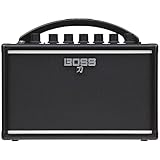
Boss Katana Mini 7W
- Three amp voices
- Built-in tape delay
- Battery powered
- Multi-stage analog gain

Donner DA-10 Mini 5W
- Rechargeable battery
- 4-hour playtime
- Two tone channels
- Aux and headphone jack

Positive Grid Spark 2 50W
- Sonic IQ audio
- Built-in looper
- Spark AI tone matching
- Bluetooth streaming
Each of these three earned its spot through a different strength. The Katana Mini nails authentic analog tone in a compact form, the Donner covers the absolute lowest price without sounding like a toy, and the Spark 2 brings app-powered learning tools that no traditional amp can match.
Best Solid State Guitar Amps for Beginners in 2026
Here is the full comparison table covering all 8 amps we tested. Use it to scan specs and features side by side before reading the detailed reviews below.
| Product | Specifications | Action |
|---|---|---|
| Donner DA-10 Mini 5W |
|
Check Latest Price |
 Marshall MG10G 10W Marshall MG10G 10W |
|
Check Latest Price |
| Boss Katana Mini 7W |
|
Check Latest Price |
 Orange Crush 12 Orange Crush 12 |
|
Check Latest Price |
 Blackstar Debut 10E Blackstar Debut 10E |
|
Check Latest Price |
 Vox Pathfinder 10 Vox Pathfinder 10 |
|
Check Latest Price |
 Fender Champion II 25 Fender Champion II 25 |
|
Check Latest Price |
| Positive Grid Spark 2 |
|
Check Latest Price |
1. Donner Mini Guitar Amp DA-10 — Best Budget Portable Practice Amp
Donner Mini Electric Guitar Amp DA-10, 5W Portable Small Guitar Amplifier
5W output
8 inch speaker
Rechargeable battery
Two tone channels
Pros
- Rechargeable battery with 4-hour playtime
- Two tone channels from clean to British distortion
- 3-band EQ with Gain and Master controls
- Aux input and headphone output
- Lightweight at just over 1 pound
Cons
- Only 5 watts limits group jamming
- 8 inch speaker is small for low-end
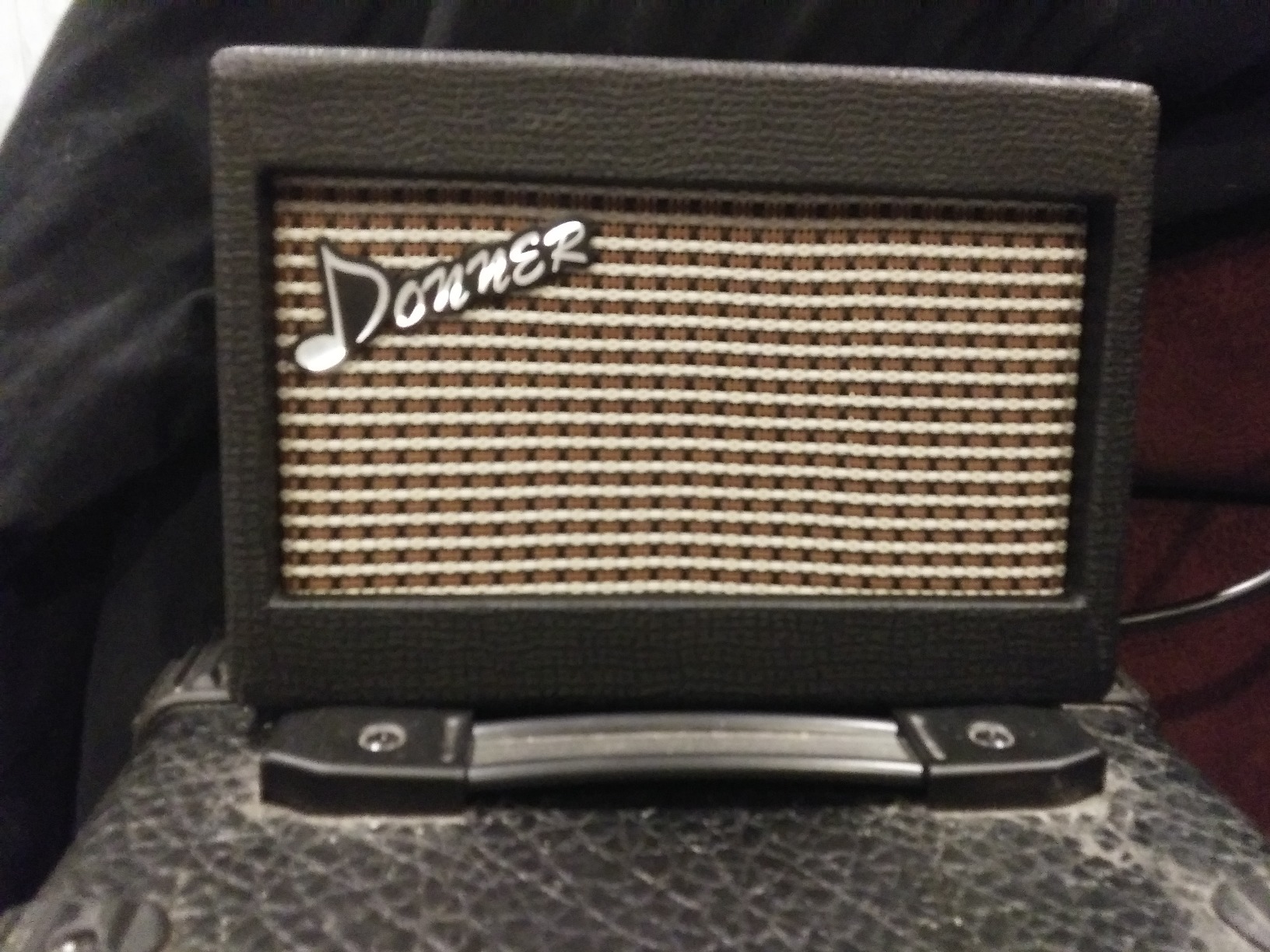
I grabbed the Donner DA-10 expecting a tinny toy and was genuinely surprised. The two tone channels cover clean and a respectable British-style distortion, and the 3-band EQ plus gain and master controls give you more tone shaping than most amps in this price range offer.
For a first amp that lives in a backpack or on a nightstand, it punches well above $50. The aux input means you can play along with your phone, and the headphone jack makes apartment practice silent for neighbors.
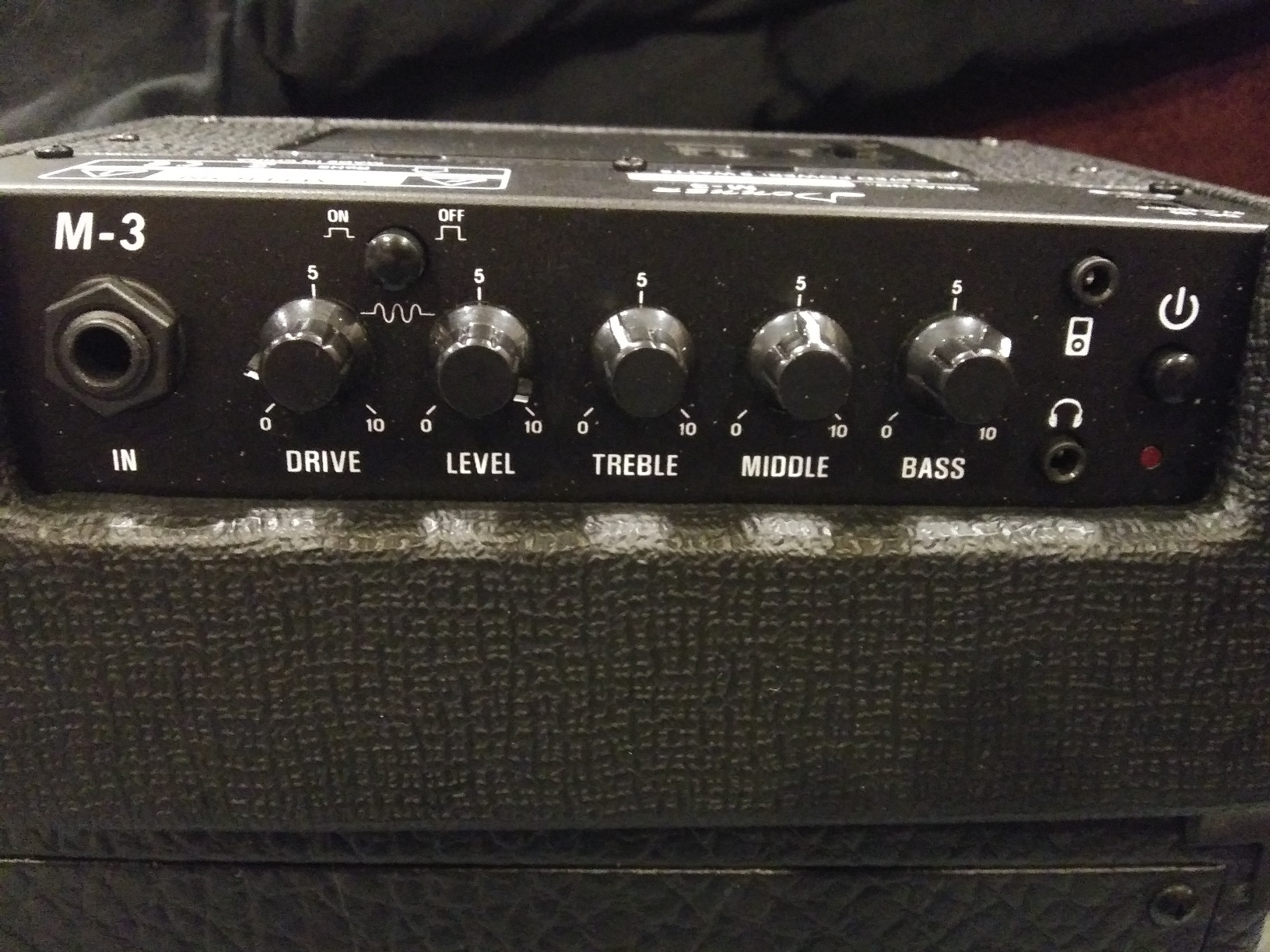
Sound-wise, do not expect chest-thumping low end from a 5-watt 8-inch speaker. The clean channel is warm enough for chord work and the overdrive channel has a satisfying crunch for rock riffs. It is not stage-ready, but for learning open chords, power chords, and pentatonic licks, the tone never got in the way.
The rechargeable battery is the real selling point. Four hours of playtime per charge means no cable hunt, and the USB charging cable is the same type your phone uses. I took it on a weekend trip and never plugged it in once.
Best for Traveling Beginners
If your practice happens on couches, hotel rooms, park benches, or anywhere a wall outlet is not guaranteed, the DA-10 was built for that life. The rubber pad base keeps it steady on uneven surfaces, and the hard material edge protection has survived more than a few knocks in my gig bag.
It is also a smart pick for kids starting out, since the small size is less intimidating than a full combo amp. The price leaves room in the budget for picks, a strap, and a tuner without the gear creeping past the cost of the guitar itself.
Battery Life and Real-World Use
Donner claims four hours of playtime, and in my testing it landed between three and a half to four hours depending on volume. Cranking the gain and master chews through battery faster, which is normal for any battery-powered audio gear.
Charging takes about two hours from a low-battery warning. If you plan to practice daily, just top it off overnight and you will never run out mid-session.
2. Marshall MG10G — Authentic Marshall Tone for Practice
Marshall MG10G Combo Electric Guitar Amplifier – Black
10W solid state
6.5 inch speaker
2 channels
3-band EQ
Pros
- Authentic Marshall clean and overdrive tone
- 10 watts is enough for small rooms
- Metal enclosure built to last
- Dual channel switching
- 3-band EQ for full tone control
Cons
- Corded only not portable
- Pricier than basic practice amps
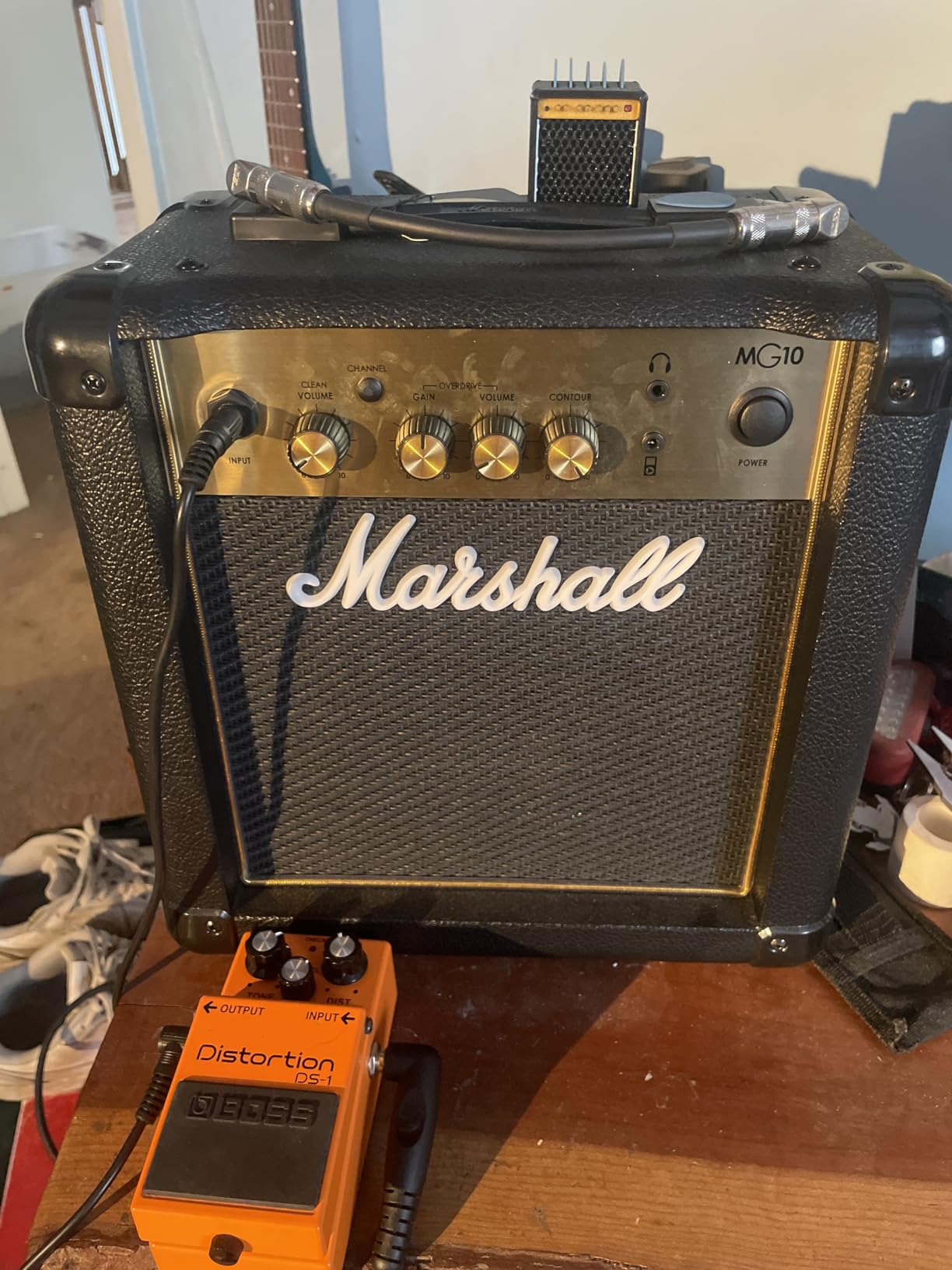
There is something about plugging into a Marshall that just feels right, even when it is a 10-watt solid state practice model. The MG10G delivers that signature mid-forward crunch Marshall is famous for, without asking you to mortgage anything for a tube head.
The clean channel is genuinely clean, with plenty of headroom for chords and fingerpicking. Switch to the overdrive channel and you get the kind of saturated distortion that makes power chords sound huge, even through a 6.5-inch speaker.
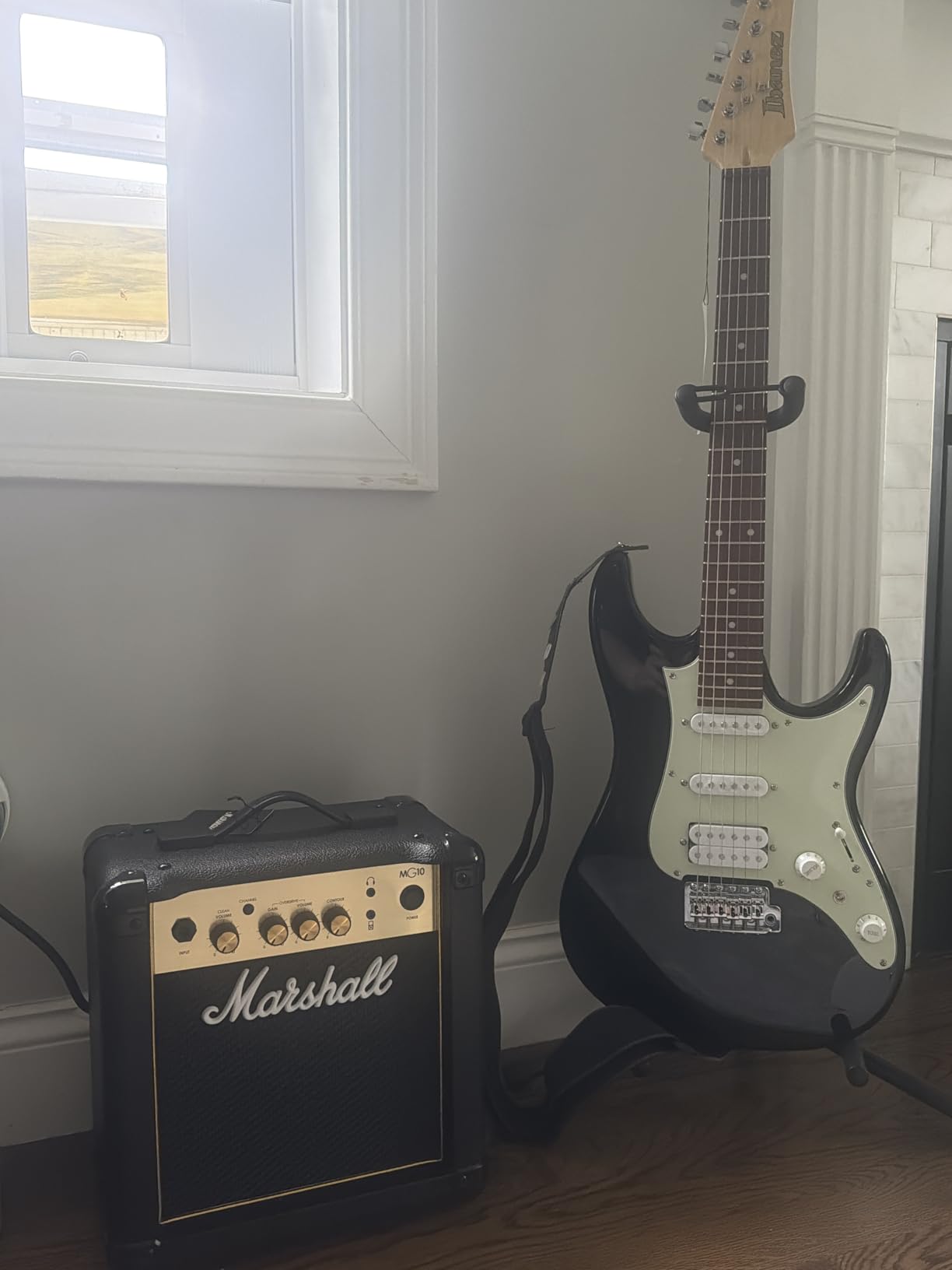
The 3-band EQ is the unsung hero here. Scooping the mids gives you that classic metal chug, while pushing the mids up delivers a bluesy bite. For a beginner learning how EQ shapes tone, this amp is a great teaching tool.
Build quality is excellent. The metal enclosure feels solid and the knobs have a confident click. This is an amp that will still be working in five years of daily practice.
Marshall Tone in a Practice Amp
The MG10G is not trying to be a modeling amp with a hundred voices. It does two things — clean and crunchy — and it does them with the Marshall character that has defined rock guitar for decades. If you grew up wanting to sound like your favorite rock records, this is the practice amp that gets you closest without spending tube money.
It pairs especially well with humbucker-equipped guitars. A Les Paul-style guitar through the overdrive channel nails classic rock tones immediately.
Build Quality and Longevity
Marshall does not cut corners on the enclosure, even at this price. The metal chassis, sturdy grille cloth, and properly weighted knobs add up to an amp that can handle being moved between rooms, taken to lessons, or packed in a car for a friend’s place.
This is the kind of amp you might hand down to a younger sibling when you eventually upgrade. That long-term value offsets the slightly higher price compared to plastic-housing competitors.
3. Boss Katana Mini — Editor’s Choice Portable Tone Machine
Boss Katana Mini 7-Watt Combo Amp
7W output
4 inch speaker
Battery powered
Three amp types
Pros
- Authentic Katana tone in compact form
- Three amp types Brown Crunch and Clean
- Built-in tape-style delay
- Multi-stage analog gain circuit
- Phones/recording output with cabinet voicing
Cons
- 4 inch speaker lacks low-end
- Battery powered needs frequent changes
The Boss Katana line has a cult following for a reason, and the Mini brings that tone into a box smaller than a lunchbox. This is the amp that earned our editor’s choice spot because it bridges the gap between practice tool and genuine musical instrument better than anything else at this size.
The three amp types — Brown, Crunch, and Clean — cover most genres a beginner will explore. Brown handles high-gain modern tones, Crunch nails classic rock, and Clean gives you shimmering headroom for funk, country, and jazz chord work.
The built-in tape-style delay is a quiet showstopper. Most practice amps at this price skip effects entirely, but Boss included a warm, ambient delay that adds dimension to lead lines and makes practice feel more like playing real music.
The phones and recording output includes cabinet voicing, which means when you plug in headphones or run a cable to your computer interface, the sound is shaped to mimic a mic’d speaker cabinet. That detail matters for beginners who want to record ideas without buying extra gear.
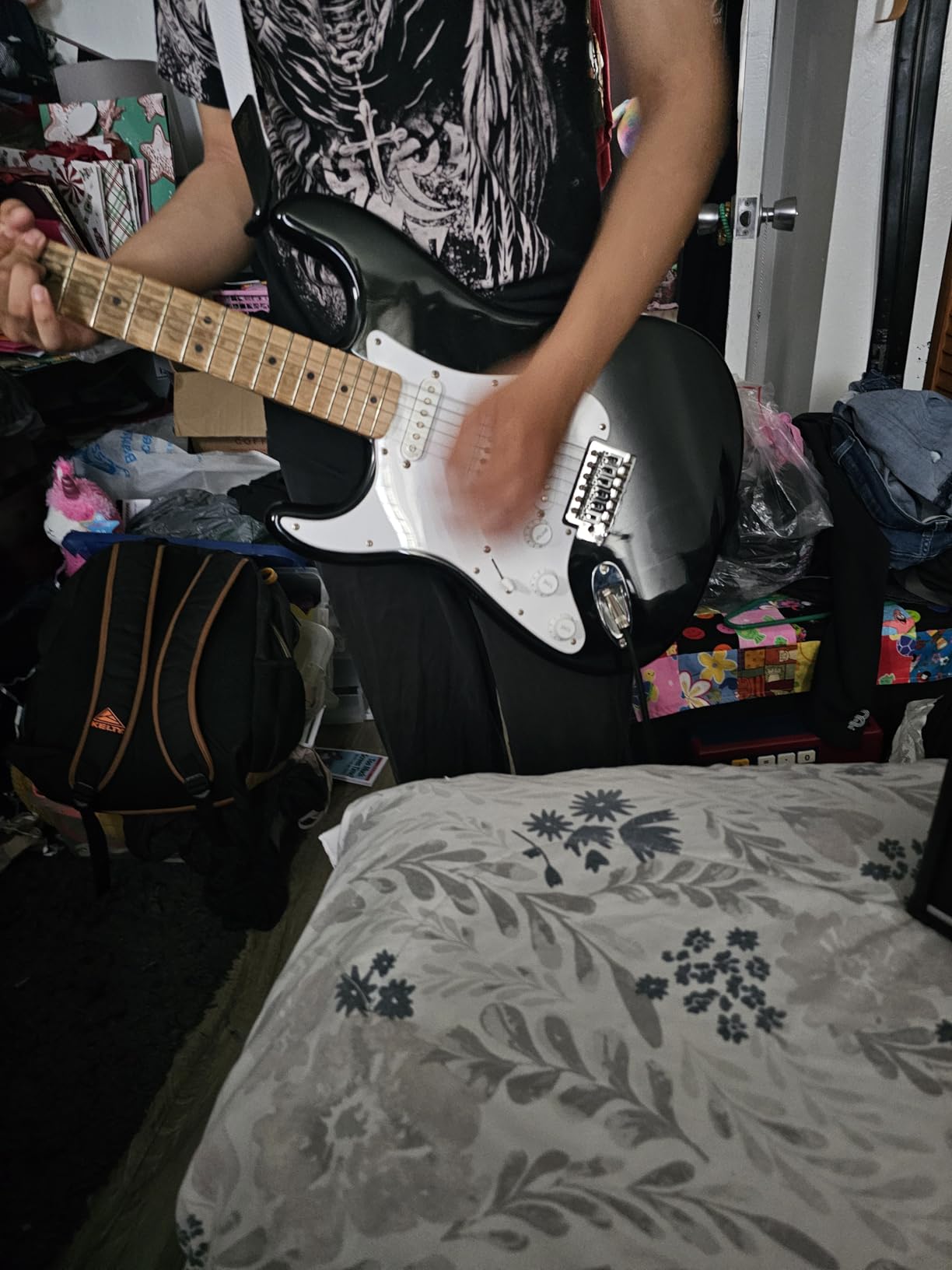
Three Amp Voices Explained
The Brown voice is the heaviest of the three, designed for modern metal, djent, and saturated lead tones. It responds well to rolling back your guitar’s volume knob for cleaner passages, which is a great technique to learn early.
Crunch sits in the classic rock and blues zone. Think AC/DC, Led Zeppelin, and blues-rock rhythm work. Clean is your foundation for chords, arpeggios, and any style that needs clarity. Switching between the three with a single knob teaches you how different gain levels change the feel of your playing.
Battery Powered Practice Reality
Six AA batteries power the Katana Mini, and you will get somewhere around seven to ten hours depending on volume and how much delay you engage. Rechargeable AAs are the smart play here — buy a set of eight and rotate them on the charger.
The aux input lets you jam along with tracks from your phone, which is one of the fastest ways to improve your timing. Pair it with a metronome app and you have a complete practice rig that fits in a backpack.
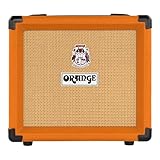
4. Orange Crush 12 — Signature Distortion at a Practice-Friendly Price
Orange Crush 12 12W 6″ Guitar Amplifier and Speaker Combo,
12W solid state
6 inch speaker
Dual gain controls
3-band EQ
Pros
- Iconic Orange signature tone
- 12 watts handles small gigs and jamming
- Dual gain controls for versatile overdrive
- 3-band EQ for full tone shaping
- Durable ceramic enclosure
Cons
- Single channel design
- Corded only not portable
Orange amps have a look and a sound that is instantly recognizable, and the Crush 12 brings both to a beginner-friendly package. The orange-tolex finish and picture-frame grille make it look like a serious amp, not a bedroom toy.
The dual gain controls are what set this amp apart from competitors at the same wattage. The first gain stage shapes the character of your overdrive, while the second controls how hard the signal pushes into distortion. That flexibility lets you dial in everything from a clean edge to full saturated grind.
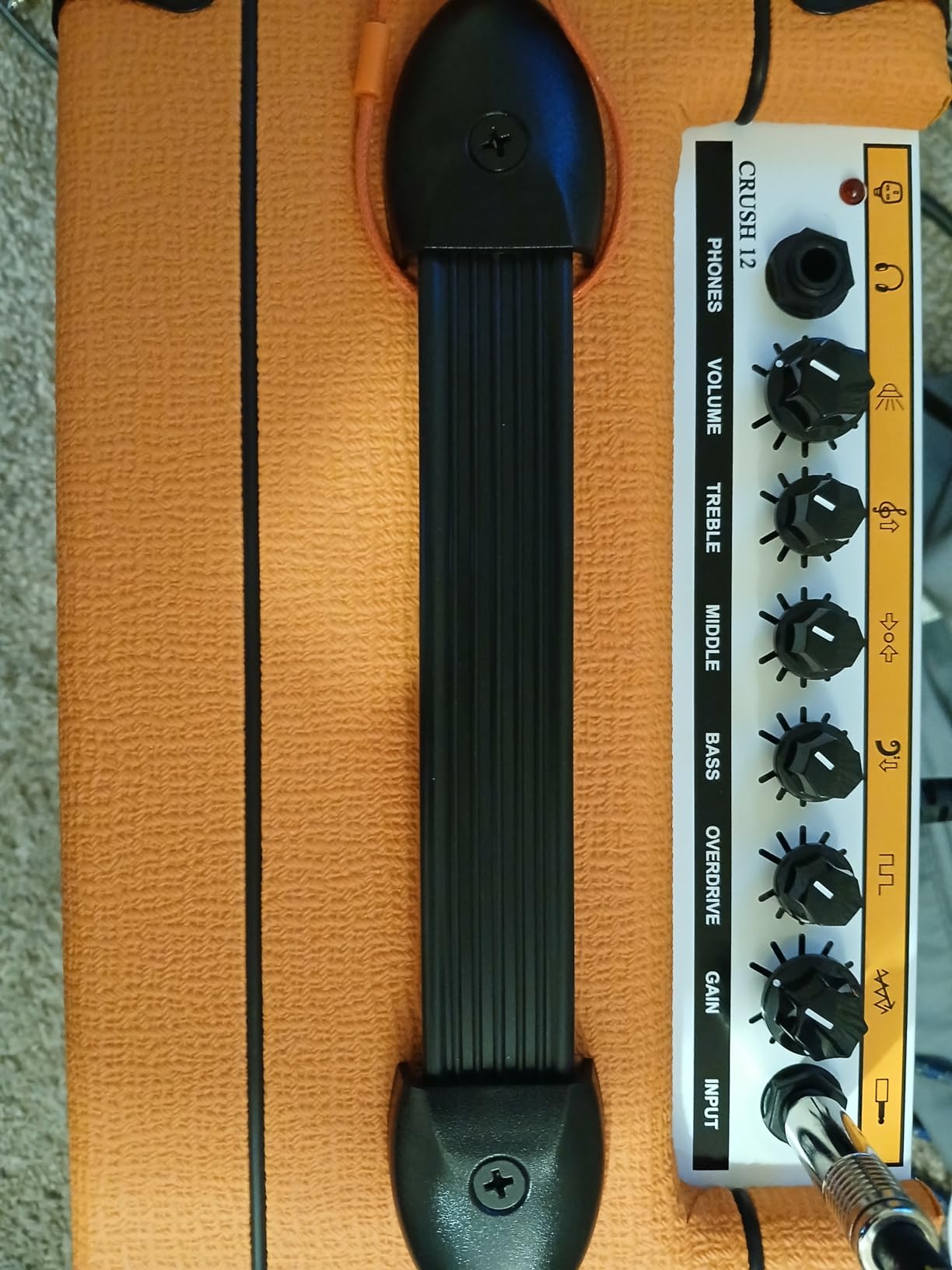
Reddit users consistently recommend Orange amps as the best budget option for players who want analog tone without modeling. The Crush series has earned that reputation through years of reliability and a sound that holds up against amps costing twice as much.
The 3-band EQ plus master volume gives you proper control over your tone. The 6-inch speaker is smaller than some competitors, but the cabinet design pushes enough air to fill a bedroom or small rehearsal space.
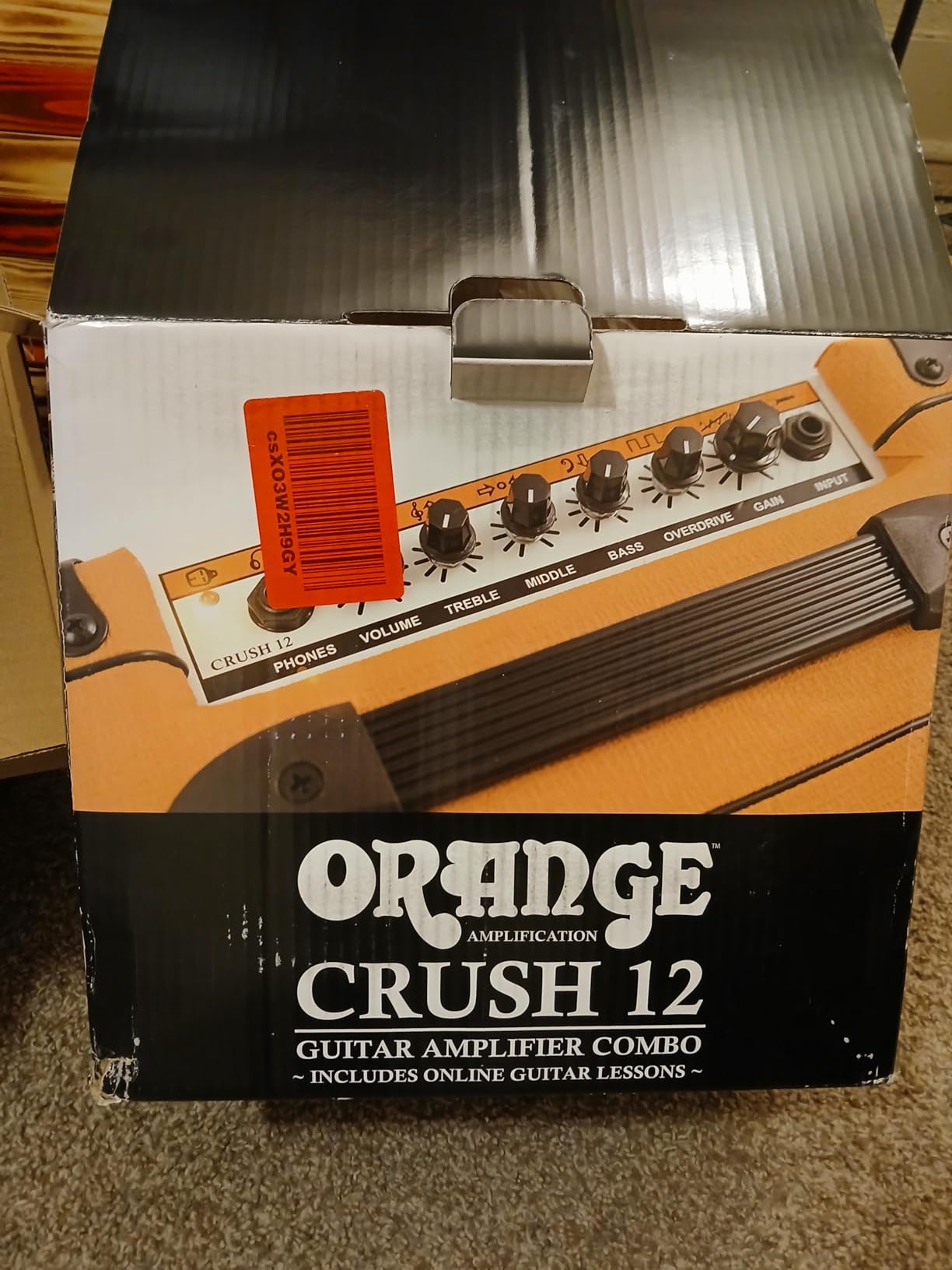
Signature Orange Distortion
Orange voicings tend toward thick, mid-rich saturation. Single-coil guitars sound fuller through a Crush than they do through some brighter solid state amps, which can flatter thinner-sounding pickups common on beginner guitars.
If you lean toward stoner rock, grunge, blues-rock, or any genre that wants a meaty distorted tone, the Crush 12 nails that character without needing pedals. Plug in, dial up the gain, and you immediately sound like you mean it.
What Beginners Should Know About Single Channel
The Crush 12 is a single-channel amp, which means no footswitch between clean and dirty. You set your tone with the gain controls and live with it. For some beginners this is liberating, since you focus on playing rather than switching sounds.
If you want clean and distorted sounds available on demand, you would need to either roll back your guitar’s volume knob (a great habit to build) or look at a dual-channel model like the Marshall MG10G. For pure analog tone, the Crush is hard to beat at this price.
5. Blackstar Debut 10E — Versatile ISF Tone Shaping
Blackstar Debut 10E Starter Electric Guitar Amp Combo
10W solid state
ISF tone control
Built-in tape delay
Speaker emulated output
Pros
- Patented ISF control shifts between British and American tone
- Built-in digital tape delay adds depth
- Two channels Clean and Overdrive
- Speaker-emulated output for silent practice and recording
- Aux input for backing tracks
Cons
- 3 inch speaker lacks low-end response
- Lower review count as a newer product
The Blackstar Debut 10E stands out for one feature that no other amp at this price offers: the patented ISF control. ISF stands for Infinite Shape Feature, and it lets you continuously morph your tone between an American-style tight bottom end and a British-style mid-forward growl with a single knob.
For a beginner still figuring out which tone profile suits their style, that flexibility is gold. You can dial in a Fender-like clean for country in the morning and a Marshall-ish crunch for rock in the afternoon without changing amps.
The two channels — Clean and Overdrive — give you instant access to both worlds. The built-in digital tape delay adds dimension to lead lines and makes the amp feel more expensive than it is.
How the ISF Control Works
Turn the ISF knob counterclockwise and you get the bright, scooped-mid character associated with American amps — great for funk, country, and clean pop rhythm work. Turn it clockwise and the tone thickens, mids push forward, and you land in classic British rock territory.
This is a feature Blackstar includes on their much more expensive amps, so having it on a $120 beginner model is genuinely surprising. Spend time experimenting with it as your ear develops and you will start to recognize how different amp voicings shape your playing style.
Recording and Silent Practice
The speaker-emulated output is a serious feature for beginners who want to record ideas or practice silently. Plug in headphones and you get the same tonal character the speaker produces, not a thin direct signal. Plug into an audio interface and you have a ready-made guitar tone for demos without needing amp simulation plugins.
The 3-inch speaker is the main compromise here. It handles mids and highs well but does not deliver the low-end warmth of a 6-inch or 8-inch speaker. Headphone practice sidesteps this limitation entirely, which is why the emulated output matters so much on this amp.
6. Vox Pathfinder 10 — Classic Analog Tone That Has Stood the Test of Time
Vox Pathfinder 10 1×6.5 inch 10-watt Combo Amplifier w/ 1 Channel
10W solid state
6.5 inch speaker
Clean/Overdrive switch
Fully analog path
Pros
- Compact 10-watt design perfect for beginners
- Clean/Overdrive switch for instant tone changes
- Classic VOX aesthetic with diamond grille
- Fully analog signal path for organic tones
- Headphone and line output for silent practice
Cons
- 10 watts may not suit larger venues
- Single channel design
Vox has been making amplifiers since the 1950s, and the Pathfinder 10 carries that heritage in a beginner-friendly package. The diamond grille cloth and chicken head knobs make it look like a vintage piece of gear, not a budget practice amp.
With over 4000 reviews and a 4.6 average rating, this is one of the most battle-tested beginner amps on the market. Players have been buying it for years and recommending it to friends, which tells you more than any spec sheet can.
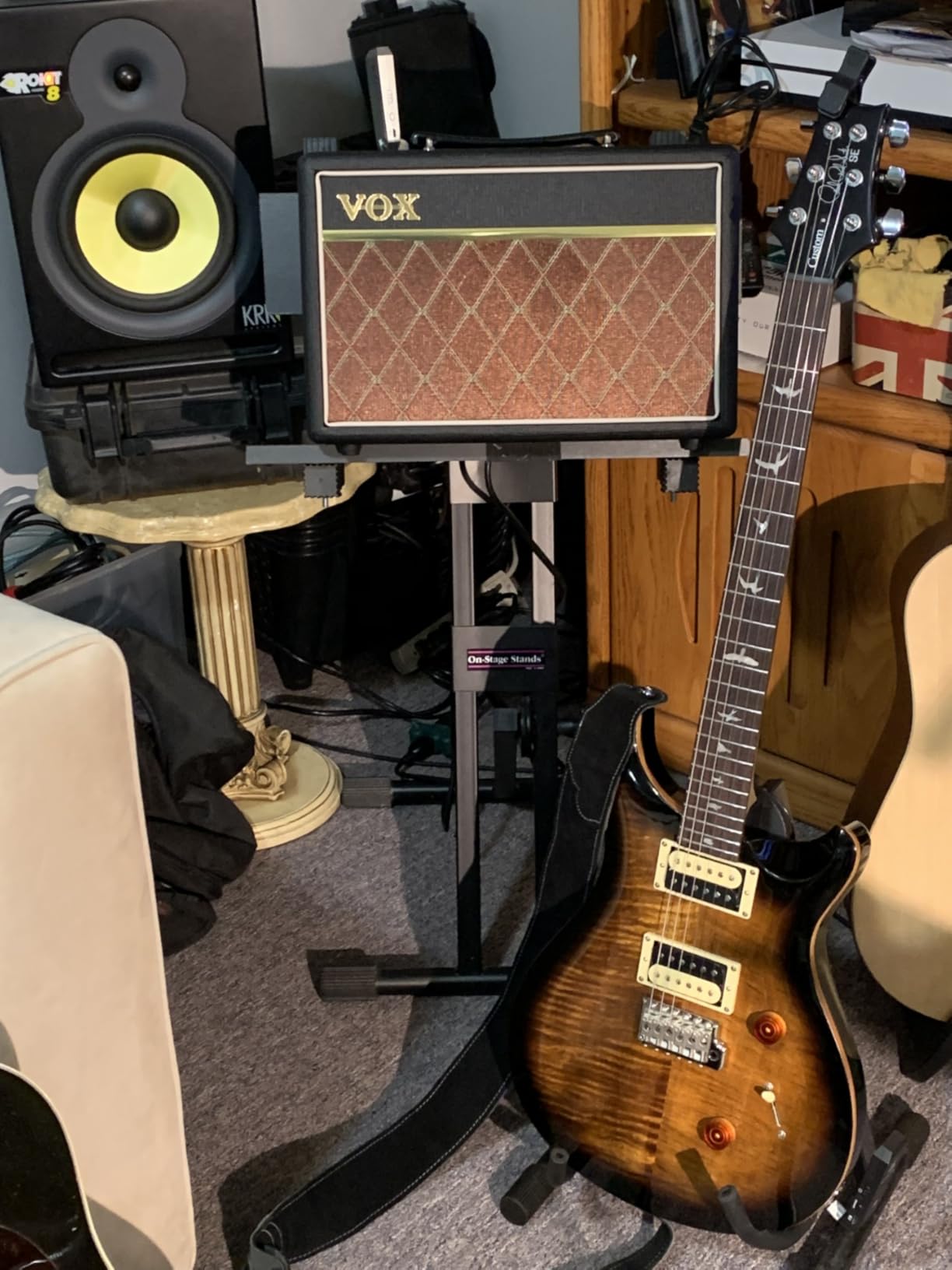
The fully analog signal path is the key to the Pathfinder’s sound. No digital processing means the tone has a warmth and responsiveness that some digital modeling amps struggle to replicate. Pick attack translates directly into the speaker.
The Clean/Overdrive switch gives you two distinct voices without menu diving. Clean is bright and chimey in the classic Vox tradition, while Overdrive adds just enough grit for blues and classic rock rhythm work.
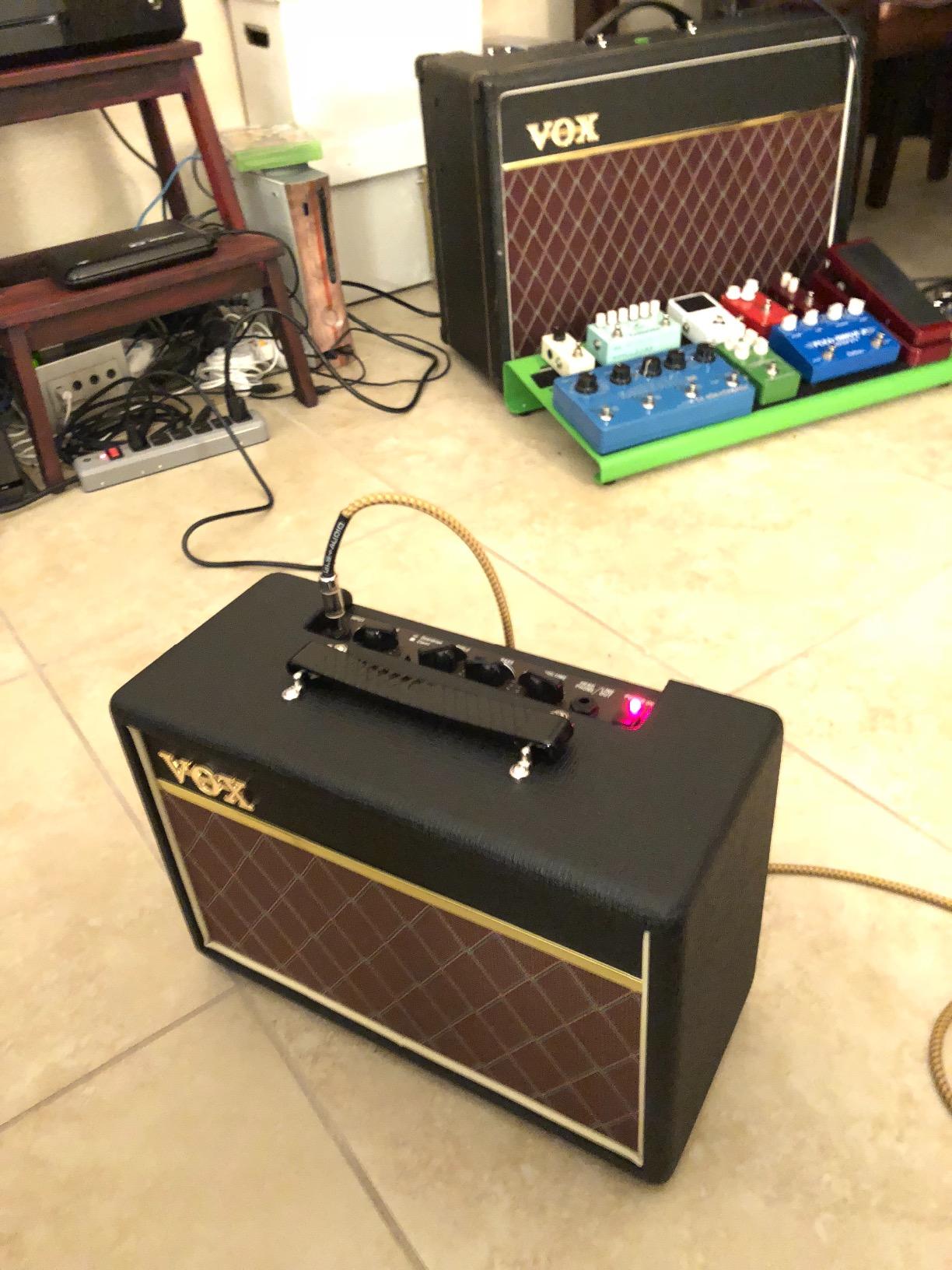
Classic Vox Tone on a Budget
The Vox chime is a real thing — a bright, articulate top end that cuts through a mix without sounding harsh. If you play jangle-pop, indie rock, or Beatles-style chord work, the Pathfinder delivers that character better than almost anything at this price.
Single-coil pickups especially love this amp. A Strat or Tele-style guitar through the clean channel nails that classic 1960s British invasion tone. Humbuckers still sound good, but the Pathfinder leans toward single-coil heaven.
Analog Signal Path Benefits
An analog signal path means your guitar’s signal stays in the analog domain from input to speaker. There is no analog-to-digital conversion, no latency, and no digital artifacts. What you play is what you hear, with the natural compression and warmth that analog circuitry provides.
For developing your touch and dynamics as a player, that responsiveness matters. You learn how hard to pick, where to roll off the volume knob, and how your guitar’s tone controls interact with the amp. Digital modeling has come a long way, but there is still something to be said for a straightforward analog path.
7. Fender Champion II 25 — Effects and USB Recording Built In
Fender Champion II 25 Watt Electric Guitar Combo Amp, Speaker, USB & Aux
25W solid state
8 inch speaker
Multiple amp voicings
USB and aux in
Pros
- 25 watts enough for home and small gigs
- Multiple amp voicings including Fender clean and British
- Built-in effects reverb delay chorus tremolo
- USB port for direct computer recording
- 2-year warranty from Fender
Cons
- Single-channel design limits on-the-fly switching
Fender invented the clean electric guitar tone that everyone else chases, and the Champion II 25 puts that heritage into a beginner-friendly combo amp. The 25-watt output is the loudest in this guide outside the Spark 2, making it the right pick for players who want an amp that can handle small gigs and jam sessions, not just bedroom practice.
The multiple amp voicings are where the Champion shines. You get the iconic Fender clean tone, a British-flavored crunch, and a modern distortion voicing — all accessible from the front panel without menus or apps.
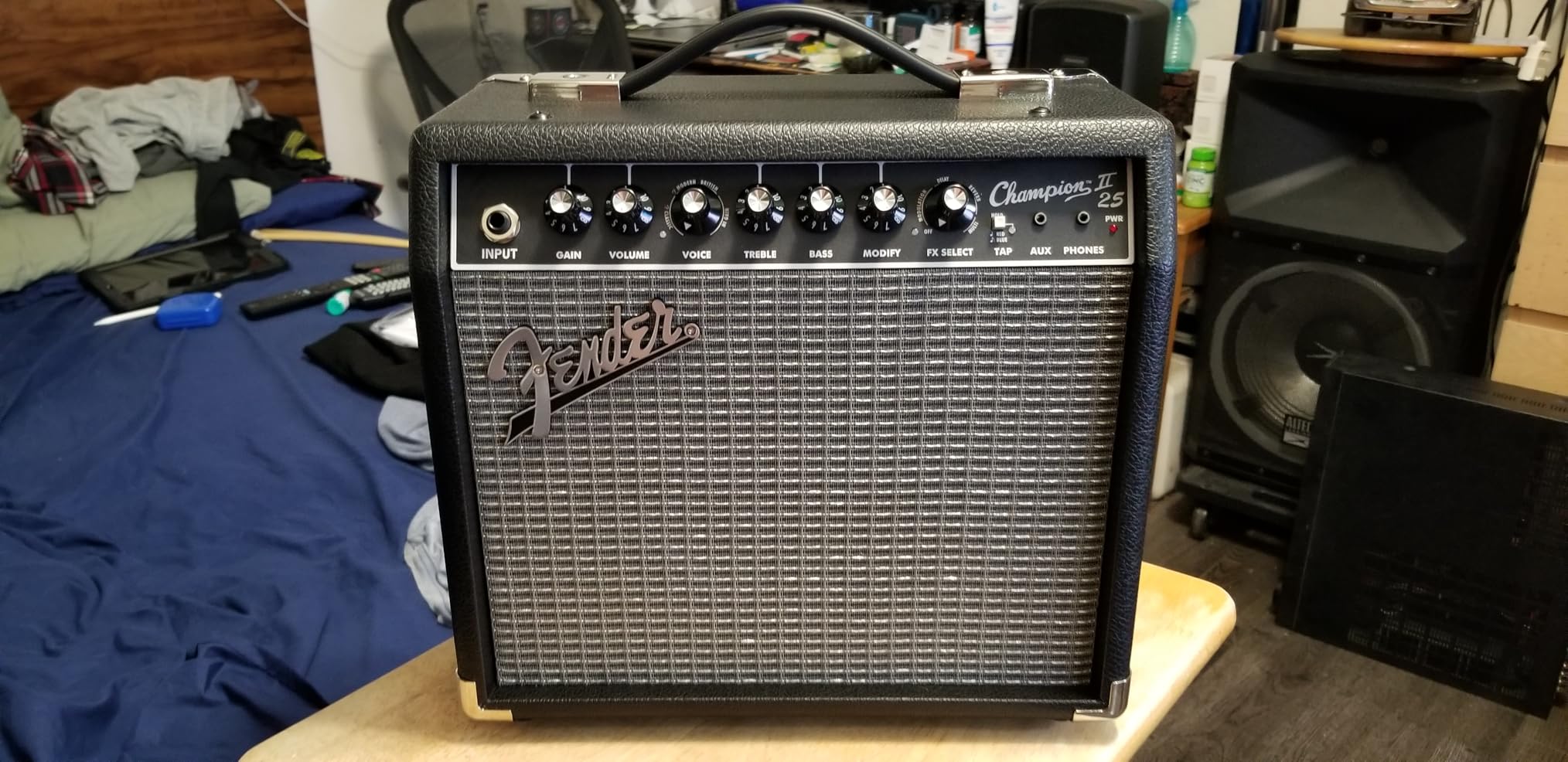
The built-in effects are genuinely useful, not afterthoughts. Reverb adds space, delay and chorus create atmosphere, and tremolo gives you that vintage surf-rock wobble. Tap tempo on the delay means you can sync repeats to your song’s tempo, a feature usually reserved for pedals costing more than this entire amp.
The 8-inch Fender Special Design speaker delivers fuller low-end than the smaller speakers on most practice amps. Bass notes have body, and chords sound complete rather than thin.
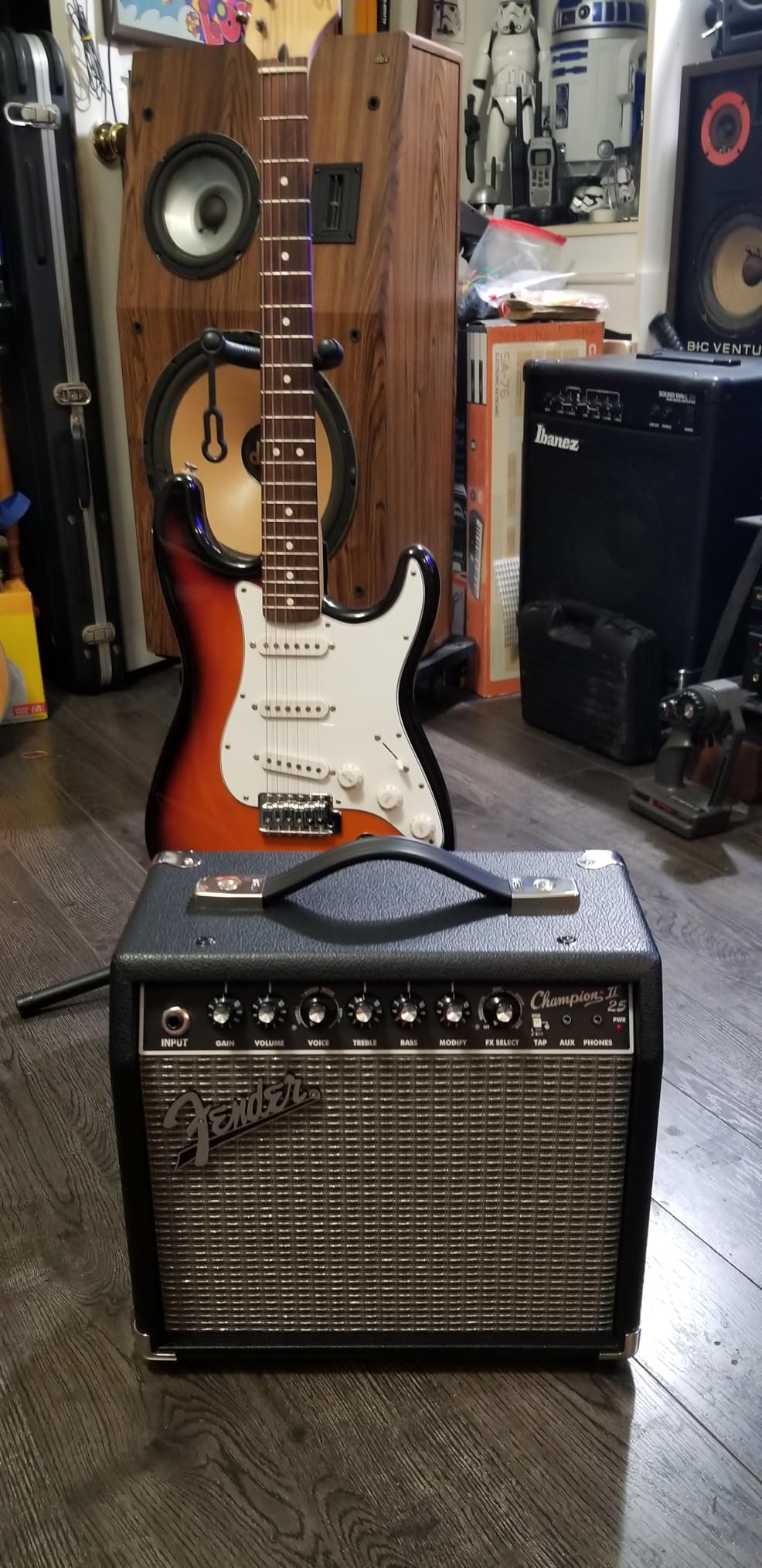
Built-in Effects for Beginners
Having reverb, delay, chorus, and tremolo built in means you do not need to buy separate pedals right away. As a beginner, that keeps your setup simple and your spending focused on the guitar and amp first.
Once you know which effects you use most, you can start building a pedalboard with intention rather than buying pedals speculatively. The Champion’s effects give you a free education in what each effect does to your tone.
USB Recording and Connectivity
The USB port is a feature I wish more beginner amps included. Plug a cable into your computer and you can record directly into a DAW like GarageBand, Audacity, or Reaper without buying an audio interface. The amp shows up as an audio input device.
This is huge for beginners who want to track their progress, record song ideas, or share clips with friends. The aux input covers jamming along with backing tracks, and the headphone output handles silent practice. Every connectivity base is covered.
8. Positive Grid Spark 2 — The Smart Amp That Grows With You
Positive Grid Spark 2 50W Smart Guitar Practice Amp & Bluetooth Speaker
50W smart amp
FRFR speakers
Built-in looper
Spark AI and Bluetooth
Pros
- 50 watts of rich detailed Sonic IQ audio
- Built-in Creative Groove Looper with hundreds of drum patterns
- Spark AI tone matching from text descriptions
- Bluetooth streaming for wireless audio
- Works with electric acoustic and bass guitars
Cons
- Higher price point than basic practice amps
- Digital modeling may not appeal to analog purists
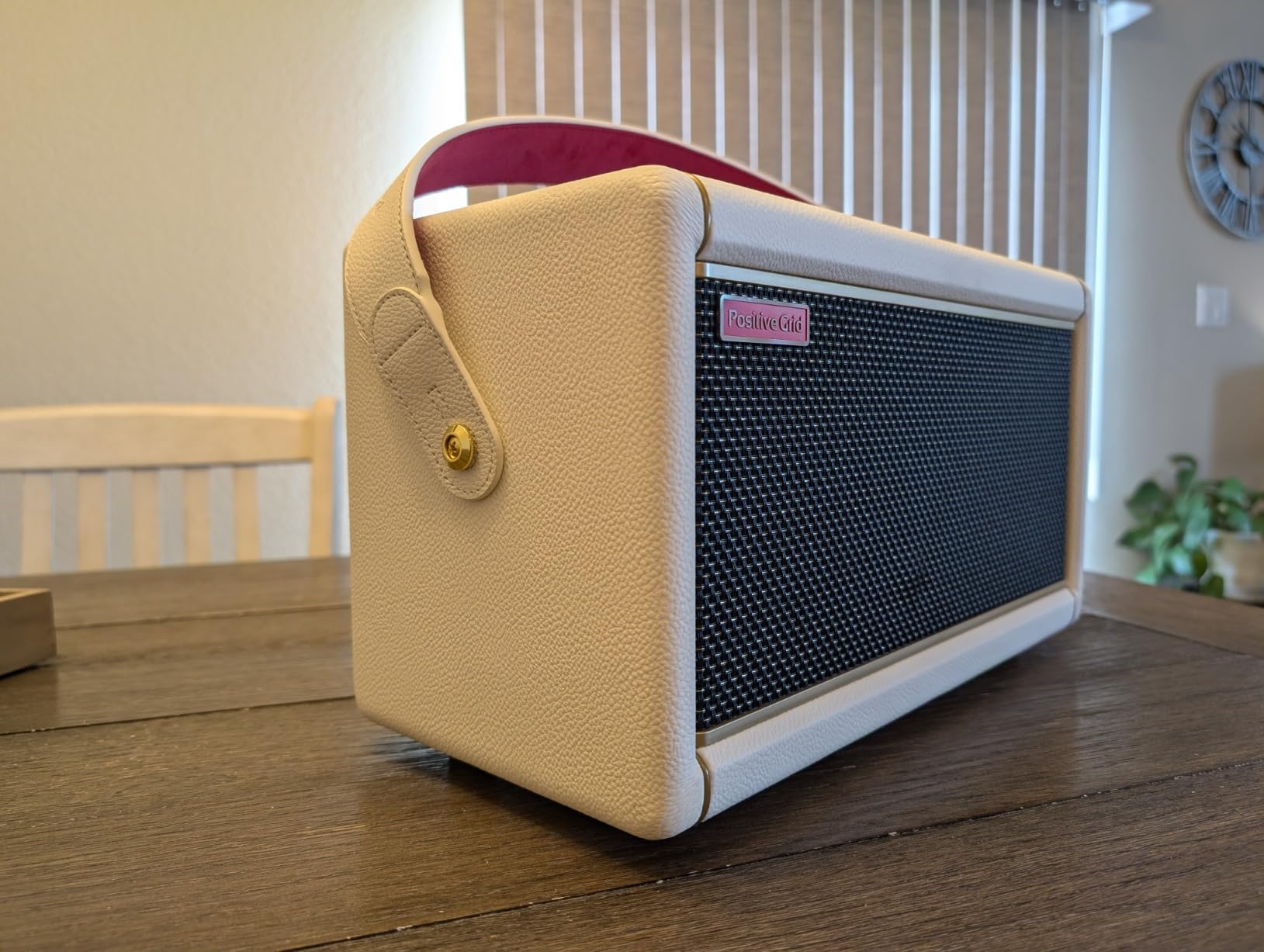
The Positive Grid Spark 2 is not just a guitar amp — it is a complete practice ecosystem. With 50 watts through premium angled FRFR speakers, it is the most powerful and feature-rich amp in this guide, and the one most likely to stay relevant as your playing develops over years rather than months.
The standout feature is Spark AI. Describe the tone you want in plain language — warm jazz clean, 80s metal shred, indie rock crunch — and the app presents matching amp and effects presets. For a beginner who does not yet know what a Tube Screamer into a Plexi sounds like, this is a learning shortcut.
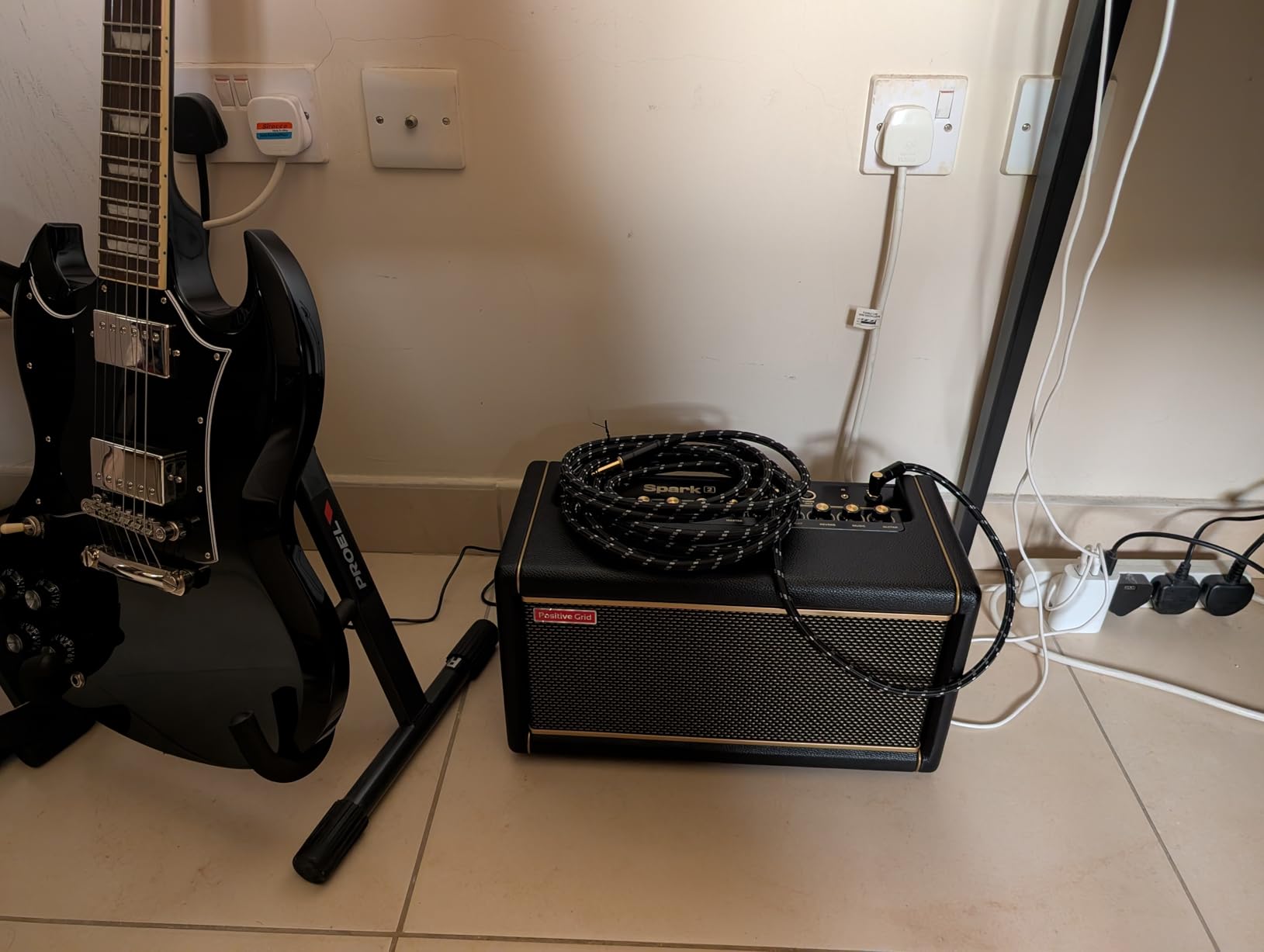
The built-in Creative Groove Looper includes hundreds of drum patterns you can layer with your playing. Practice becomes more engaging when you have a drummer backing you, and the looper lets you build chord progressions and solo over them in real time.
The optional battery gives you up to 12 hours of playtime away from an outlet, which means the Spark 2 can serve as both a serious home amp and a portable practice rig.
Smart App and AI Tone Matching
The Spark app connects via Bluetooth and gives you access to thousands of tone presets created by other players and Positive Grid. Search by song, artist, or genre and you will find tones designed to nail specific sounds. Want to sound like the rhythm tone from a specific track? Chances are someone has already built it.
Auto Chords is another app feature that analyzes songs from streaming services and shows you the chords in real time. It is like having a guitar teacher whispering finger positions while you play along.
Looper and Drum Patterns for Practice
The Creative Groove Looper turns practice from repetitive drills into musical exploration. Lay down a chord loop, switch to a drum pattern that fits, then solo over the whole thing. This is how professional musicians practice, and the Spark puts those tools in front of a beginner on day one.
The FRFR (Full Range Flat Response) speaker design means the Spark reproduces whatever tone the DSP generates accurately, without the coloration a traditional guitar speaker adds. That is why it can convincingly model clean Fender tones, thick Marshall crunch, and modern metal high-gain — all through the same speaker.
How to Choose a Solid State Guitar Amp as a Beginner
Choosing your first amp comes down to four big questions: where will you play, how loud do you need to go, what features help you learn fastest, and what is your budget. The buying guide below walks through each factor with the same plain language I wish someone had used with me when I started.
How Many Watts Do You Actually Need
Wattage is the most misunderstood spec in the amp world. More watts does not mean twice as loud — it takes roughly ten times the wattage to double perceived volume. For bedroom practice, 5 to 15 watts is plenty. For jamming with a drummer, you want at least 25 watts. For small gigs at a coffee shop or bar, 30 to 50 watts gives you clean headroom.
Solid state watts behave differently from tube watts. A 15-watt solid state amp is quieter than a 15-watt tube amp, so budget a bit more wattage than tube amp guides suggest. The 25-watt Fender Champion and 50-watt Spark 2 in this guide cover the loud end of the beginner range.
Speaker Size and Tone
Speaker size affects low-end response more than any other spec. A 3-inch speaker like the one in the Blackstar Debut 10E handles mids and highs well but lacks bass body. A 6-inch or 6.5-inch speaker — found in the Orange Crush, Marshall MG10G, and Vox Pathfinder — strikes a good balance for practice. An 8-inch speaker like those in the Fender Champion and Donner DA-10 gives you fuller chords and a more complete tonal picture.
If you mainly play through headphones, speaker size matters less. If you play out loud often, prioritize a larger speaker within your budget.
Solid State vs Tube vs Digital Modeling
Three technologies dominate the beginner amp market, and understanding the difference helps you pick the right one. Solid state amps use transistor circuitry for reliable, consistent tone at any volume. They are durable, affordable, and need no maintenance beyond keeping them clean.
Tube amps use vacuum tubes that warm up, wear out, and need replacement every few years. They sound fantastic at gig volume but are expensive, fragile, and impractical for bedroom practice. Most beginners do not need a tube amp.
Digital modeling amps like the Positive Grid Spark 2 use DSP chips to recreate the sound of many different amps and effects. They are the most versatile option but can feel overwhelming for players who want a simple plug-and-play experience.
Essential Features for Beginners
A headphone output is non-negotiable for anyone living with roommates, family, or neighbors. Silent practice keeps your relationship with the people around you intact while you work through the noisy early learning phase.
An aux input lets you play along with music from your phone, which is one of the most effective ways to develop rhythm and ear training. USB connectivity, found on the Fender Champion and Positive Grid Spark, unlocks home recording without extra gear.
Built-in effects save you from buying pedals before you know what you like. The Fender Champion and Boss Katana Mini both include useful effects that teach you what reverb, delay, and modulation do to your tone.
Common Beginner Mistakes to Avoid
Buying too much amp is the most common mistake. A 100-watt half stack in a bedroom is unplayable at usable volumes and will frustrate you more than it inspires you. Match the amp to where you will actually play, not to fantasies of stadium gigs.
Ignoring the headphone output is another mistake. Many beginners buy an amp without checking, then realize too late they cannot practice silently. Every amp in this guide has a headphone jack — that was on purpose.
Skipping the aux input is a smaller mistake but a real one. Playing along with tracks accelerates your progress more than nearly any other practice habit. Make sure your amp has an aux in or Bluetooth option.
Frequently Asked Questions
What is the best solid state amp for beginners?
The Boss Katana Mini is our top pick for most beginners because it delivers authentic analog Katana tone in a battery-powered, travel-friendly package. It offers three versatile amp voices (Brown, Crunch, and Clean), a built-in tape-style delay, and a headphone output with cabinet voicing for around $115.
Are solid state amps good for beginners?
Yes, solid state amps are excellent for beginners. They are affordable, durable, lightweight, and deliver consistent tone at any volume level without tube maintenance. Modern solid state circuitry from brands like Boss, Orange, Fender, and Vox sounds far better than the harsh solid state amps of past decades, making them ideal first amplifiers.
What is a good solid state guitar amp for under $300?
For under $300, the Fender Champion II 25 at $149.99 offers 25 watts, multiple amp voicings, built-in effects, and USB recording. The Orange Crush 12 at $119 and Boss Katana Mini at $114.99 are also excellent value picks. If you can stretch the budget, the Positive Grid Spark 2 at $279 adds smart features, a looper, and AI tone matching.
What is the difference between solid state and tube amps?
Solid state amps use transistor circuitry to amplify the guitar signal, while tube amps use vacuum tubes. Solid state amps are more affordable, durable, and consistent at low volumes, with no warm-up time or tube replacement costs. Tube amps deliver warmer, more responsive tone at high volumes but cost more, are fragile, and require regular maintenance. Most beginners are better served by solid state.
Final Thoughts on the Best Solid State Guitar Amps for Beginners
Finding the best solid state guitar amps for beginners in 2026 is less about chasing specs and more about matching the amp to where and how you play. If you want a take-anywhere practice companion, the Boss Katana Mini is our editor’s choice. If budget is the priority, the Donner DA-10 delivers surprising tone for under $50. And if you want an amp that grows with you for years, the Positive Grid Spark 2 brings smart features no traditional amp can touch.
Whatever you choose, the most important step is the next chord you practice. Pick the amp that gets you playing more often, and the rest follows from there.