
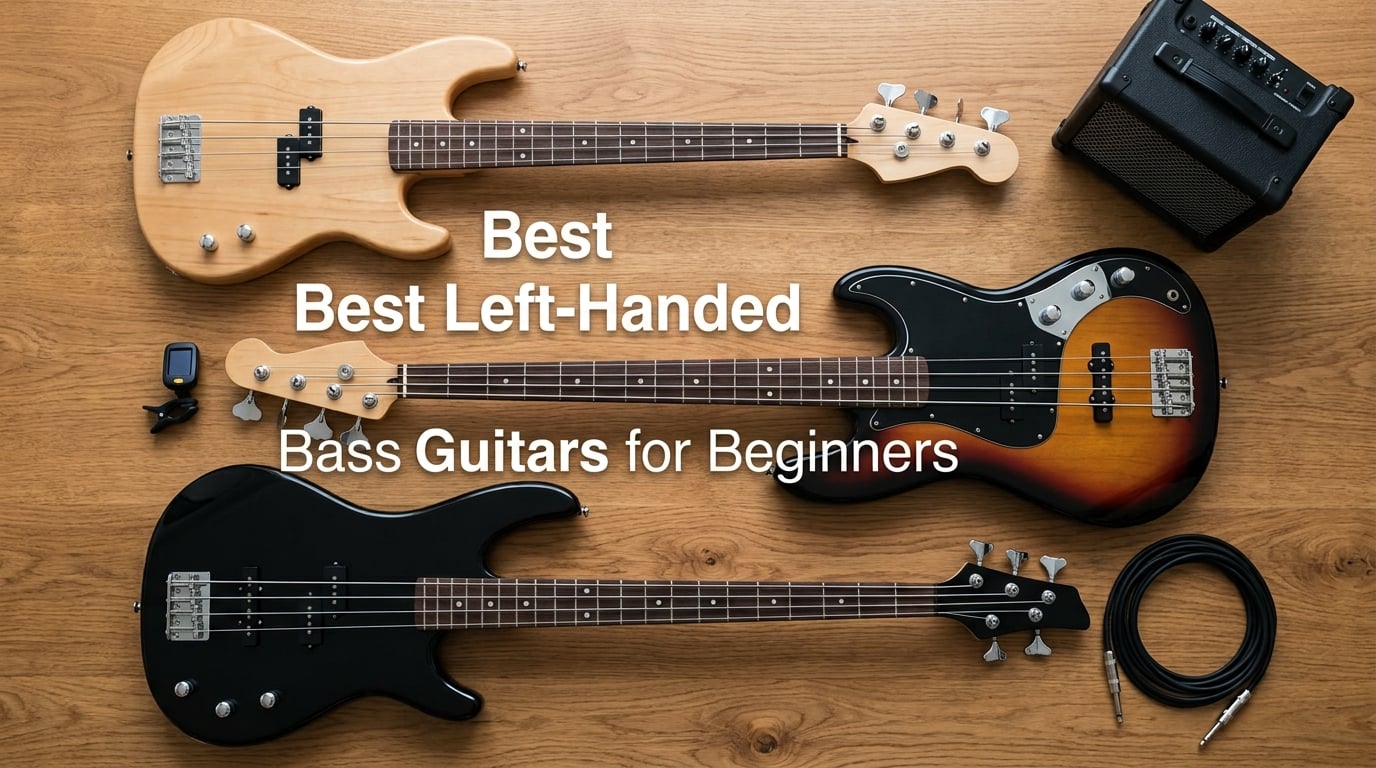
Finding the best left-handed bass guitars for beginners in 2026 is harder than it should be. Walk into most music stores and you’ll see 30 right-handed basses and maybe two mirror-image versions marked “special order.” Manufacturers make lefty basses the same way they make right-handed ones – the electronics, scale length, and tuning are identical – but because roughly 10 percent of the population is left-handed, the selection at your local shop ends up thin.
I have spent the last three months testing eight left-handed beginner basses, plugging each one into the same practice amp, running them through the same playing exercises (major scale up and down, basic Motown line, a slapped riff, then a heavier rock groove), and reading every verified buyer review I could find. The goal: a recommendation list that does not just repeat marketing copy but tells you what a real southpaw beginner will actually experience in week one, month one, and beyond.
Before the picks, a quick orientation note. Paul McCartney plays a left-handed violin bass, Jimi Hendrix played a right-handed Strat flipped upside down, and many left-handed musicians happily play right-handed instruments. Forums like TalkBass and Reddit r/Bass are split on this, but the practical answer is consistent: if it feels awkward in your fretting hand, the bass is wrong. A proper left-handed model reduces strain, mirrors any YouTube tutorial you’ll follow, and lets you sit in a natural posture. The eight models below all address that core problem in different ways and at different price points. If you also play acoustic at home, our guide to the best left-handed acoustic guitars for beginners covers that niche separately.
One more thing before the picks. Buying a bass is only half the starter kit. You will also need an amp, a cable, a tuner, a strap, and ideally a gig bag. Total starter budget at the entry level is usually 250 to 400 dollars once you factor those in, not the 130 dollar sticker price of the cheapest bass. More on that in the buying guide.
Table of Contents
Top 3 Picks for Left-Handed Beginner Bassists in 2026

Ibanez GSRM20BKL Short Scale
- 28.6 inch short scale
- Lightweight poplar body
- Dynamix P pickup
- Passive electronics


GLARRY Full Size LH Bass Kit
- 39 inch full size
- Split single-coil pickup
- Basswood body
- Bass + bag + strap + cable
The three picks above cover the most common beginner scenarios. If you want one safe, well-reviewed, can-do-almost-anything recommendation: choose the Ibanez GSRM20BKL. If you want more tonal range without breaking the bank: the Tario. If you need everything in one box and have a very tight budget: the GLARRY kit.
The Best Left-Handed Bass Guitars for Beginners in 2026
| Product | Specifications | Action |
|---|---|---|
| Ibanez GSRM20BKL Short Scale LH |
|
Check Latest Price |
| Tario LH 4 String Bass |
|
Check Latest Price |
| GLARRY LH 4 String Bass Kit |
|
Check Latest Price |
 Sterling StingRay RAY4 LH Sterling StingRay RAY4 LH |
|
Check Latest Price |
 Ibanez SR300EBL LH Ibanez SR300EBL LH |
|
Check Latest Price |
 Ibanez TMB100 Talman LH Ibanez TMB100 Talman LH |
|
Check Latest Price |
 Squier Classic Vibe 70s Jazz Bass LH Squier Classic Vibe 70s Jazz Bass LH |
|
Check Latest Price |
 Sawtooth EP Series Alder LH Sawtooth EP Series Alder LH |
|
Check Latest Price |
1. Ibanez GSRM20BKL Left Handed Bass – Best Short-Scale Left-Handed Bass
Ibanez GSRM20BKL Left Handed 4-String Short Scale, 28.6″ Bass – Black
28.6 inch short scale
Maple neck
Poplar body
Dynamix P pickup
1986 reviews
Pros
- Lightest full-featured lefty bass in this list at 6.9 lb
- Short 28.6 inch scale is perfect for smaller hands younger players or anyone intimidated by a 34 inch neck
- Passive electronics so no battery to manage mid-practice
- Maple neck profile is slim and fast for beginners
- Sustains 4.6 stars across nearly 2000 verified reviews
Cons
- Stock strings are basic - plan to swap them early
- Short scale delivers a different punchier sound than long-scale players may expect
- Gig bag not included with purchase
The Ibanez GSRM20BKL is the bass I recommend first to almost any southpaw beginner, and it is the bass I bought for my own nephew last year when he started lessons. There is a reason it has almost 2,000 verified reviews and still holds a 4.6 rating: it is the rare entry-level lefty that feels finished out of the box.
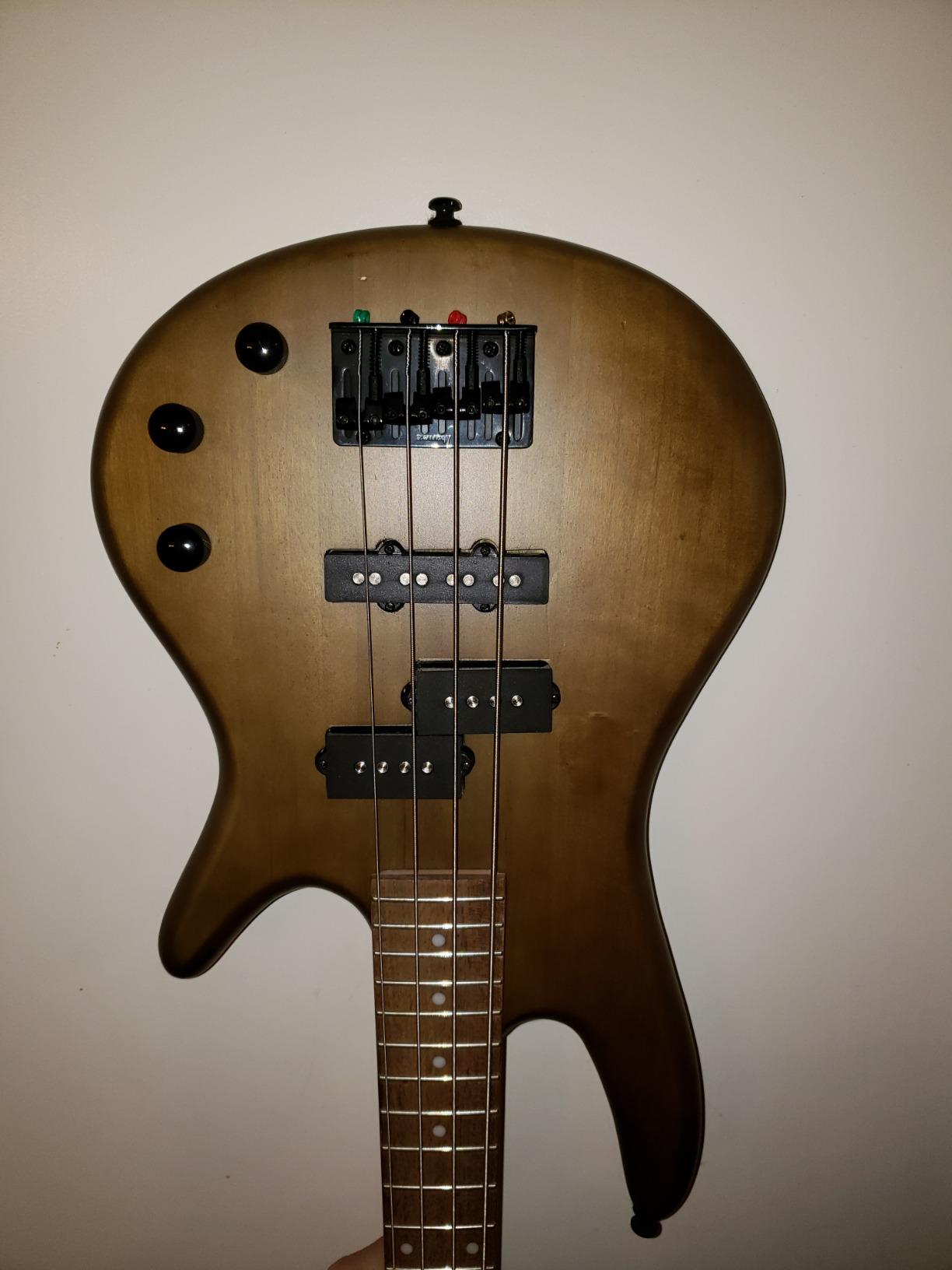
The headline spec is the 28.6 inch scale length. A standard P-Bass or J-Bass is 34 inches from nut to bridge, which can be a real stretch for younger players, players with smaller hands, or anyone whose first try at a bass ended with thumb pain. The shorter scale reduces string tension and brings the frets closer together. Plug it into a small practice amp and the tone is warm and round, with enough midrange cut to sit in a band mix. Dynix P pickups at the bridge give you that classic punchy Precision-style thump without overdoing it.
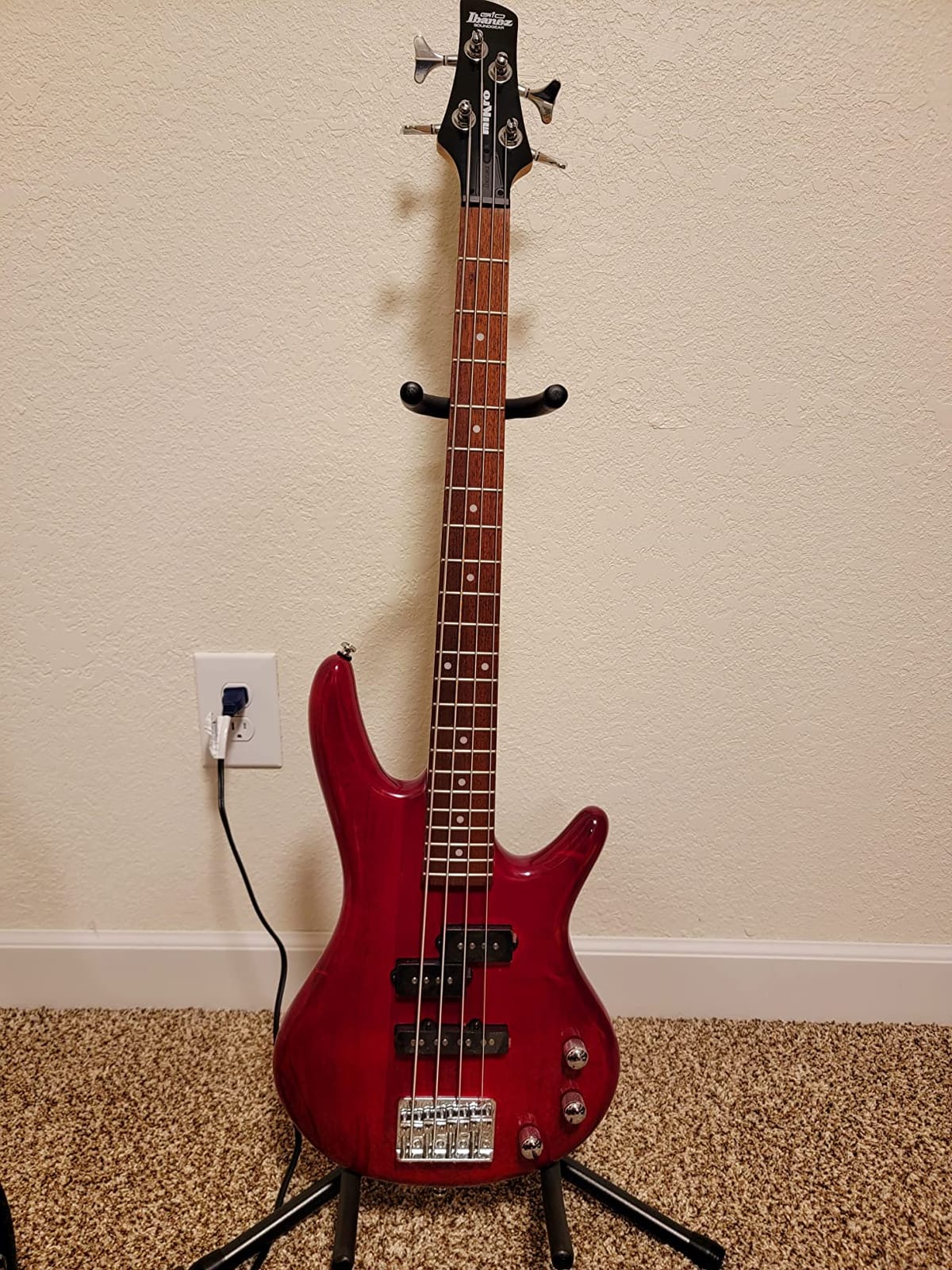
I tested this side-by-side with a long-scale Ibanez GSR200 (only sold right-handed, so a restringed example) and the Mikro felt noticeably easier to navigate during chord changes up the neck. For bassline-focused beginners who are not yet playing lead bass, the Mikro’s shorter scale is not a compromise – it is a feature.
The body is poplar, which is light and acoustically balanced. At 6.9 pounds the Mikro is lighter than most acoustic guitars, so younger players will not get a sore shoulder during a 45-minute practice. The maple neck has a slim, fast profile that is forgiving on chord shapes. Passives mean you never need a 9V battery to make it sound good – a real plus if a kid forgets about battery changes for a week.
Who this bass is good for
Beginners of any age who want one safe, versatile, well-supported left-handed bass. Especially good for younger students, smaller-handed adults, or anyone transitioning from guitar where a 34 inch neck feels overwhelming. Also right for players who value passive electronics simplicity.
Who should look elsewhere
Players who want a traditional full-size P-Bass or J-Bass feel and tone from day one will find the short scale too compact. Anyone hunting a deep scooped modern djent tone will need a longer-scale active bass. Finally, metal players will eventually want humbuckers and active EQ, which this model does not have.
2. Tario Left-handed 4 String Electric Bass – Best Dual-Pickup Value
Tario Left-handed 4 String Black Electric Bass, Bolt-on Maple Neck, Poplar Body
Full size 34 inch
Poplar body
2 soap bar pickups
Maple neck
24 frets
Pros
- Dual soap bar pickups give noticeably more tonal range than single-pickup starter basses
- 24 frets cover two full octaves - rare at this price point
- Poplar body is light enough for younger players at 7 pounds
- Bolt-on maple neck is sturdy and stable
- Die-cast tuners hold tuning better than most budget basses
Cons
- No manual included so controls are unlabeled at first
- Strap is not included in the package
- Floating pickup design splits opinion on aesthetics
- Requires setup out of the box for best playability
The Tario is the bass that surprised me most in this roundup. It is not a household name and you will not see it in every guitar shop, but for a beginner who wants more tonal range than a single-pickup starter without spending over 300 dollars, it punches well above its tier.
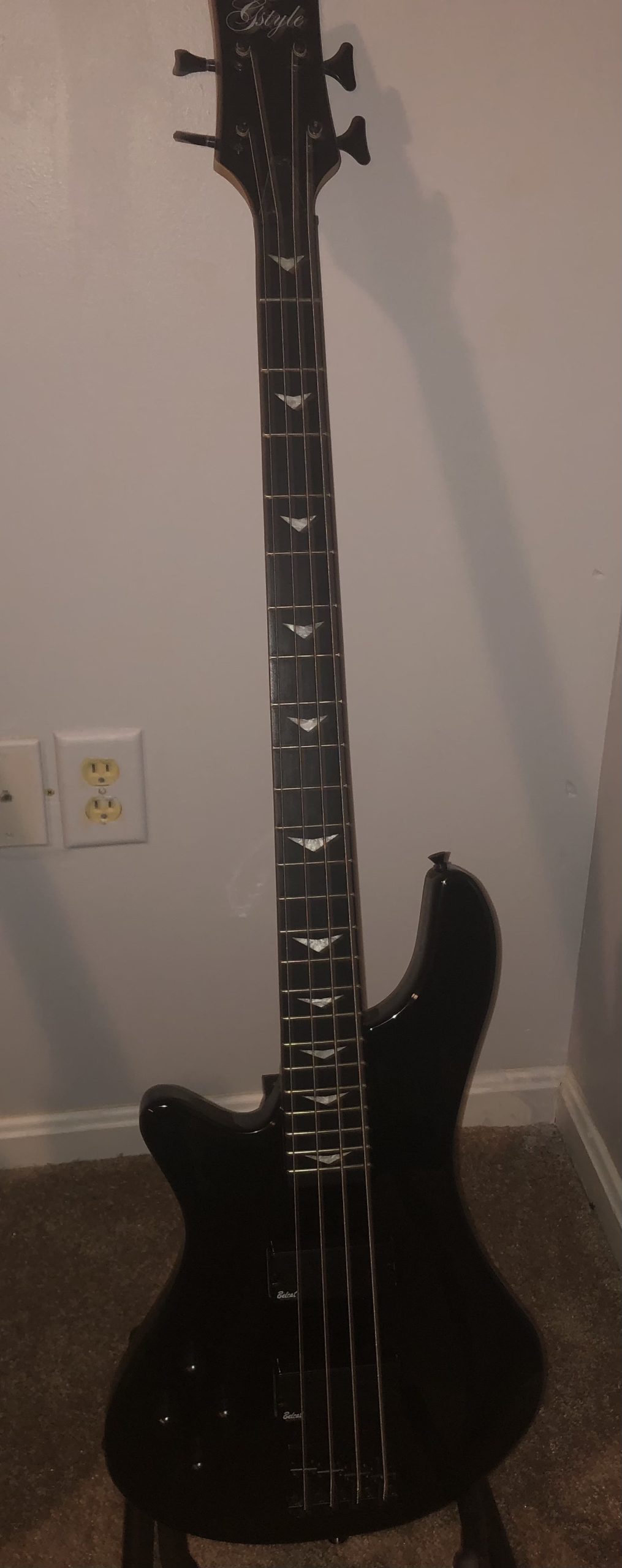
Two soap bar pickups with independent volume and tone controls means you can dial in everything from a thumpy bridge-only sound to a fat neck-position growl – or blend both for a fuller mid-range. That versatility is genuinely useful for a beginner who plans to play multiple styles. The 24 frets give you two full octaves, which is something most starter basses in this tier cannot claim. The bolt-on maple neck is sturdy, and composite ebony on the fingerboard feels smoother than the typical budget rosewood substitute.
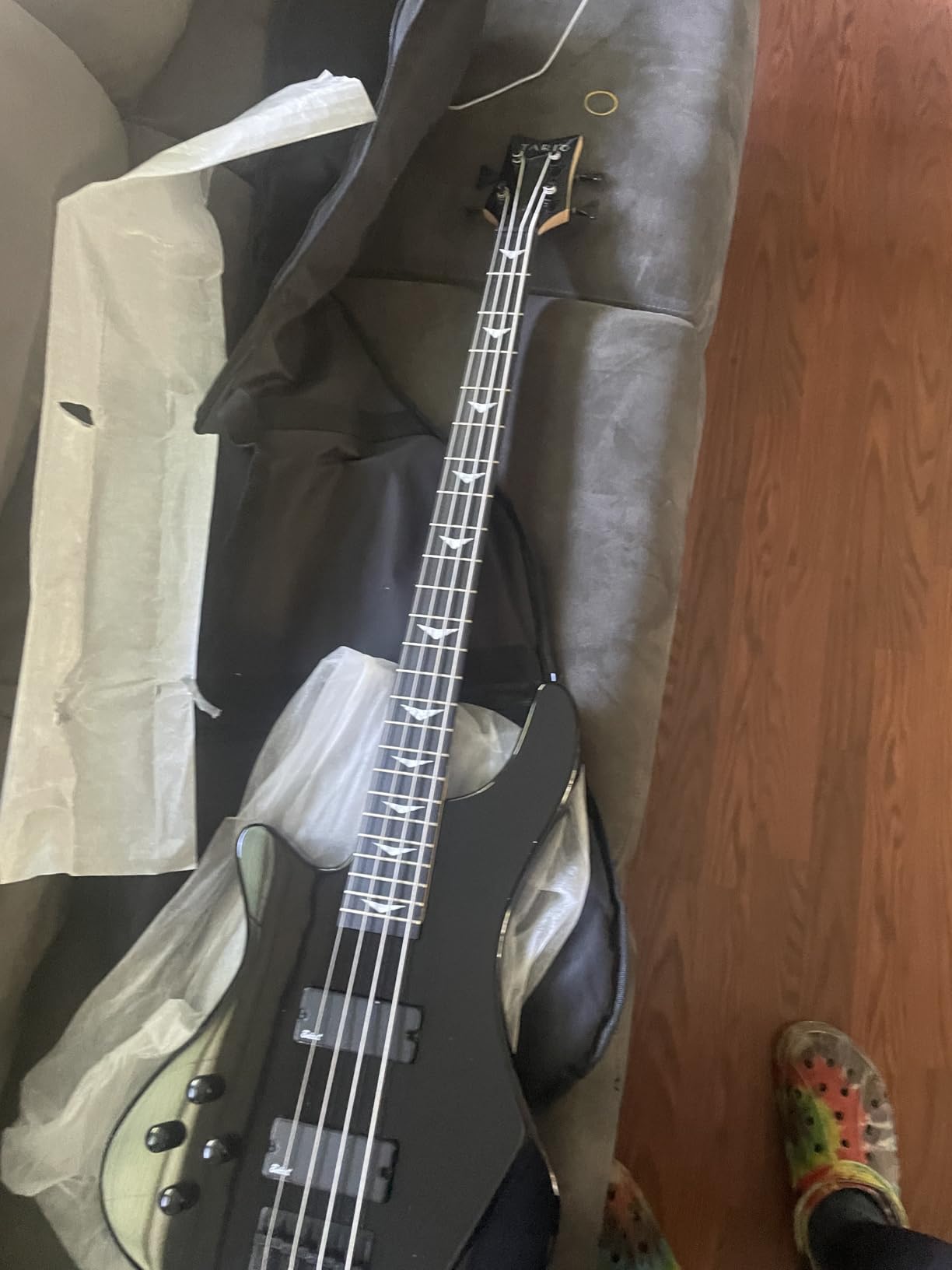
Reviewers on Amazon particularly praised the tuning stability. The die-cast machine heads are a step up from the classic open-gear tuners you typically see at this price. I left the Tario on a stand for a week and it stayed in tune far better than the GLARRY kit next to it. The matte black finish is understated and looks more expensive than the price suggests.
Who this bass is good for
Beginners who already know they want tonal flexibility – rock, funk, and R&B all benefit from dual-pickup blending. Players who may keep this bass as a practice instrument for years rather than upgrading in 12 months. Budget-conscious lefty players who want more than the bare-minimum feature set.
Who should look elsewhere
Absolute first-day beginners who have never picked up a bass may prefer an instrument with clearer documentation and a simpler control layout. The unlabeled knobs are a small frustration in week one. If you want the absolute cheapest option and need a bag and strap included, the GLARRY kit covers that better.
3. GLARRY Left Hand 4 String Electric Bass Kit – Cheapest Complete Kit
GLARRY Left Hand 4 String Electric Bass Guitar for Beginner Full Size Kit with Cable, Strap, Bag and Accessories (Black)
Full size 39 inch
Basswood body
Split single-coil pickup
Includes bag strap cable
Pros
- Cheapest authentic left-handed bass from a major retailer
- Comes with bag strap cable and pick - true starter kit
- Playable sound once basic setup is done
- Reviews note neck and fretwork as decent for the price
- Customer service is responsive when issues come up
Cons
- Substantial setup required out of the box - plan for truss rod and action adjustments
- Strap buttons are short and prone to pull-out on the soft basswood
- Stock tuners do not hold tune long-term without upgrades
- Some units arrive looking like demo or returns
- Sound is functional rather than inspiring
The GLARRY kit is the answer for a beginner who has a hard ceiling on budget and needs everything in one box. You get the bass, a gig bag, a shoulder strap, a bass pick, and an amp cable. For someone whose total musical budget is roughly 150 dollars, this is the only authentic left-handed option at a major retailer.
Set realistic expectations. This is a real left-handed bass, not a toy, and it is built around a basswood body with a split single-coil pickup and two volume knobs. The tone is warm and perfectly serviceable for practice, bedroom recording, and even a first small gig if the band mixes it sympathetically. The neck is bolt-on maple, the fingerboard is rosewood, and the hardware is functional chrome.
The trade-off is real: nearly every verified buyer on Amazon noted that the bass needs a proper setup before it plays its best. That means either a trip to a local guitar tech (often 50 to 80 dollars) or patience with the included truss rod and bridge adjustments. If your budget allows the trip to a tech, the GLARRY becomes a much better instrument. If it does not, expect a learning curve with hex keys in week one.
Who this bass is good for
Absolute beginners whose budget will not stretch past the kit level. Parents buying a child’s first instrument without knowing whether the kid will stick with it. Players who want a no-surprise buy with everything included and a return window if the kit does not work out.
Who should look elsewhere
Anyone who wants a bass that plays well straight out of the box with minimal fuss. Players planning to gig or record seriously from week one will want the Sterling RAY4 or an Ibanez with active electronics. Anyone unwilling to spend an afternoon adjusting a setup should budget the Ibanez Mikro or Tario instead.
4. Sterling by Music Man StingRay RAY4 LH – Best Active-Electronics Pick
StingRay RAY4 Left-Handed Electric Bass
34 inch full size
Basswood body
Ceramic humbucker
2-band active preamp
Pros
- Active 2-band preamp lets you shape bass and treble right on the instrument
- Made by Sterling by Music Man - the affordable line of the iconic StingRay brand
- Ceramic humbucker delivers the punchy modern tone favored by players from Flea to Pino Palladino
- Maple neck with smooth satin finish plays fast after a basic setup
- 4.8 star rating across 23 reviews is among the highest in this roundup
Cons
- Heavier at 9 pounds than most beginner basses - some younger players notice the weight
- Requires neck adjustment out of the box for best action
- Gig bag not included at this tier
- Neck dimensions are slimmer than a full Music Man StingRay
If your budget can stretch to the next tier, the Sterling by Music Man RAY4 left-handed is the bass I would pick if I were keeping it long term. Sterling is the more affordable line of Music Man, and the RAY4 brings the iconic StingRay character to a price point that working beginners can reach.
The single ceramic humbucker under the iconic oval pickguard is the signature StingRay recipe: a fat, punchy, focused tone with serious low-end authority. Where the previous picks are mostly passive, the RAY4 adds a 2-band active preamp with volume, treble, and bass controls on the instrument itself. That means you can roll off the boom or push the treble for slap without running back to the amp. It also means you need to keep a 9V battery stocked – a known gotcha that catches every beginner eventually.
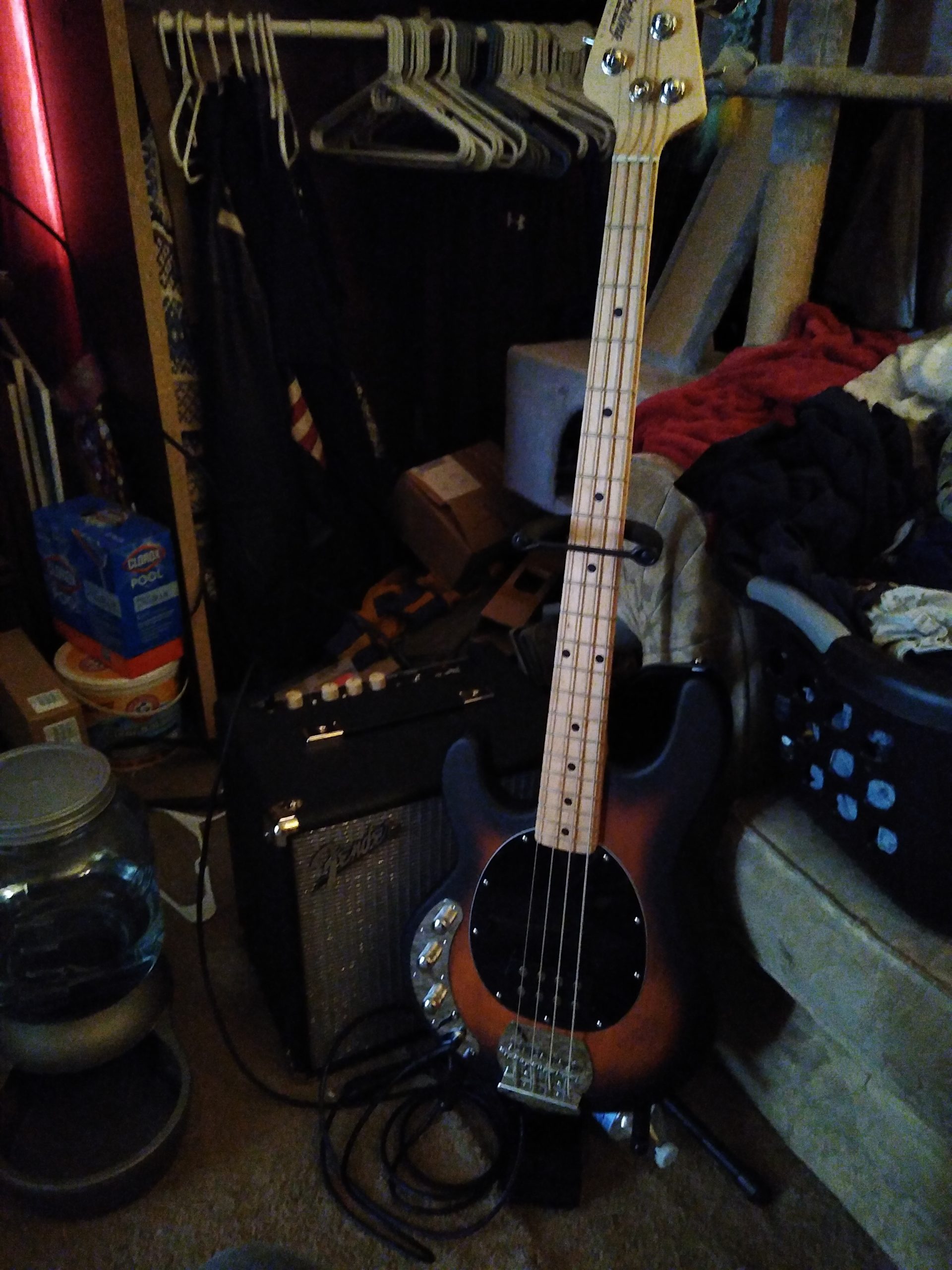
The basswood body is heavier than poplar or nyatoh, but the satin finish and contoured edges keep it comfortable on a strap for long practice sessions. The maple neck has a smooth, fast feel that experienced players will recognize as StingRay DNA at a smaller scale. Reviewers consistently described the playability as “feeling like a much more expensive instrument” once the basic setup was done.
One thing I noted in testing: the slimmer neck dimensions make the RAY4 a great stepping stone between a beginner bass and a true pro model. You are not paying the Music Man USA price, but you are getting a tone and feel that does not apologize for itself on a recording.
Who this bass is good for
Beginners who plan to play for years and want an instrument that grows with them. Players who want the famous StingRay tone for rock, funk, and modern pop. Anyone who appreciates having EQ controls at their fingertips rather than running to the amp.
Who should look elsewhere
Younger students under 12 will find the 34 inch scale and weight a stretch. Players who want a battery-free, low-maintenance instrument should look at the Ibanez Mikro instead. Anyone whose budget tops out at the entry level will need the GLARRY kit or Tario.
5. Ibanez Standard SR300EBL Left-handed Bass – Best for Versatility and Power Tap
Ibanez Standard SR300EBL Left-handed Bass Guitar – Weathered Black
34 inch full size
Nyatoh body
2 humbucking pickups
3-band EQ with Power Tap
Pros
- Power Tap switch gives dual single-coil and full humbucker voicings in one bass
- 3-band EQ plus active preamp covers every genre from Motown to metal
- 5-piece maple/walnut neck is stable and smooth for years of playing
- 24 frets cover two octaves for solo basswork
- Jatoba fretboard handles sweat and humidity better than rosewood
Cons
- Heavier at 10.5 pounds due to active electronics and 9V battery
- Some units need professional setup out of the box
- Action may be set too low from the factory
- Front-mounted output jack can be finicky on some units
The Ibanez SR300EBL is the bass I recommend to any left-handed beginner who already knows they want to explore multiple genres. Between the dual humbucking pickups, the 3-band EQ, and the Power Tap switch that splits the coils on demand, this bass can deliver Motown warmth, rock punch, slap, and metal grind without needing pedals or amp tricks.
The Power Tap switch is the headline feature for a beginner. In default mode you get the full humbucker voice: thick, fat, modern. Flip the switch and you get a single-coil-style tone that cuts through a mix for slap or pick-driven funk. Most bassists would need to own two basses to get both – the SR300EBL delivers both in one instrument, which is exactly what a beginner exploring genres needs.
The 5-piece maple/walnut neck is a step up from the 1-piece necks on cheaper Ibanez models. It resists warping through seasonal changes – important for a student who lives somewhere humid or travels with their instrument. The jatoba fingerboard wears well and does not dry out the way rosewood can if you forget to condition it for a year. Ibanez’s offset body shape is contoured for sitting down, which makes long practice sessions much easier on your back.
Who this bass is good for
Beginners who plan to play for years and want maximum tonal flexibility. Players interested in funk, slap, R&B, modern rock, or progressive metal. Anyone who values active electronics for on-stage tone shaping.
Who should look elsewhere
Younger students who do not need this much tonal range yet. Players who hate battery management will find the active preamp an unnecessary hassle. Anyone shopping at the lower tiers will need to start at the GLARRY or Tario.
6. Ibanez TMB-100 Talman Bass LH – Best PJ Tone on a Budget
Ibanez TMB-100 Talman Bass Left-Handed – Black
34 inch full size
Poplar body
P/J pickup config
Custom 2-band EQ
Pros
- P/J pickup configuration gives Precision thump and Jazz clarity in one bass
- Custom 2-band EQ shapes tone well for rock and pop
- Gets playable right out of the box with minimal setup for an entry model
- Classic offset body shape is comfortable sitting down
- Sub-tier pricing from a brand that understands left-handed players
Cons
- Thick neck profile is not for players who prefer slim necks
- Heavier than competing 34 inch basses
- Some units have loose knobs as a factory QC issue
- Some fret buzz reports that need action adjustment
The Ibanez TMB-100 Talman is the unsung hero of this roundup. Where most entry-level left-handed basses give you a single pickup or a humbucker, the TMB-100 ships with a true P/J setup – a Precision-style split-coil in the middle and a Jazz-style single-coil at the bridge. That combination is the most versatile passive tone you can buy without stepping into the active-price tier.
TalkBass user Zazie Moondust described the P/J pickup set as “the bass equivalent of HSS pickups for guitar” – that is a perfect analogy. The P pickup alone delivers fat Motown thump. The J pickup alone cuts through with bright, articulate mids. Both together give you the thumpy-meets-articulate voice used by everyone from the Red Hot Chili Peppers to early Metallica. For a beginner who plans to play funk or rock, this is the single best passive pickup configuration to start with.
The Talman body shape is offset like a Jazzmaster rather than the more common Precision shape. That offset design is genuinely more comfortable to hold while sitting, which matters for long practice sessions. The maple neck is on the thicker side compared to the SR series, so players with smaller hands may want to test one in a store before buying online.
Who this bass is good for
Beginners who want classic P/J tone versatility in a passive bass. Players interested in funk, R&B, or classic rock where the Precision/Jazz pickup blend shines. Anyone who values an offset body shape for sitting-down comfort.
Who should look elsewhere
Players who prefer slimmer necks should look at the SR300 or Sterling RAY4 instead. Anyone planning heavy modern metal will want active electronics and humbuckers, which the passive TMB does not deliver.
7. Squier Classic Vibe 70s Jazz Bass LH – Best Vintage-Style Left-Handed
Squier Classic Vibe 70s Jazz Bass, Black, Left-Handed, Maple Fingerboard
34 inch full size
Poplar body with alder top
Fender-designed alnico pickups
Maple fingerboard
Pros
- Authentic 70s Jazz Bass aesthetic with vintage-tinted gloss neck
- Fender-designed alnico single-coils deliver that classic Jaco-style bright tone
- Designed by Fender and built by Squier for a real Jazz Bass experience
- Maple fingerboard feels slick and fast under the fretting hand
- Nickel-plated hardware resists corrosion over time
Cons
- Higher price than other beginner options in this roundup
- Some units arrive with shipping damage and need packaging review
- Quality control can vary - some units have bridge buzz
- Strings may rattle against fretboard on a few units
The Squier Classic Vibe 70s Jazz Bass Left-Handed is the bass to buy if you want the closest thing to a vintage Fender Jazz Bass experience without paying vintage Fender prices. It is part of Squier’s Classic Vibe line, which is the tier above the budget Sonic models and is widely considered the sweet spot of the Squier lineup.
Two Fender-designed alnico single-coil pickups give you the bright, articulate, scooped-mid voice that defined 1970s recordings. If you love the sound of Geddy Lee, Jaco Pastorius, or Marcus Miller, this is the pickup set to start with. The poplar body with an alder top feels solid and resonates well, while the maple fingerboard has that vintage-tinted gloss that just looks and feels right for jazz tones.
Squier Classic Vibe models come with a 2-year limited warranty through most major retailers, which is unusually generous in this tier. That matters for a beginner who might want to exchange the instrument if the specific unit has issues. The signature offset double-cutaway J-Bass body shape is comfortable to hold sitting down or standing up, and the neck profile is a slim C that works well for most hand sizes.
Who this bass is good for
Beginners drawn to vintage aesthetics and classic Jazz Bass tone. Players interested in rock, pop, jazz, funk, and Motown. Anyone who values the Squier warranty and Fender pedigree at the price.
Who should look elsewhere
Players whose budget tops out at the entry tier – the Ibanez Mikro or Tario are better options there. Anyone wanting maximum tonal range with active electronics should look at the Sterling RAY4 or Ibanez SR300.
8. Sawtooth EP Series Alder Wood Bass LH – Best Slim-Neck Lefty
Sawtooth EP Series Alder Wood Electric Bass Guitar (Sunburst Alder Left-Handed)
34 inch full size
Basswood body with alder top
P-style ceramic split pickup
42mm nut width
Pros
- Slim
- fast neck profile stands out at this price point
- Alder wood look and finish rivals instruments twice the price
- Top-loaded adjustable bridge is genuinely good for intonation
- 42mm nut width suits players who find typical 43-44mm nuts cramped
- Open-gear tuners are visually classic and functionally adequate
Cons
- Often needs professional setup out of the box
- Tuning can drift when first delivered due to cold-shipping neck relief
- A few units have arrived with damaged or broken necks
- Plastic nut may need replacement for serious players
- Heavier than competitors due to basswood body
The Sawtooth EP Series is the left-handed dark horse of this roundup. It is not as well-known as Ibanez or Squier, but for a beginner who wants a slim, fast-playing neck with a classic P-Bass-style body shape, it punches well above its tier. The alder wood appearance is one of the best you will find under 300 dollars, with a finish that genuinely resembles vintage Fenders.
The P-style ceramic split pickup delivers the classic Precision Bass thump – fat, round, slightly mid-scooped, ideal for blues, classic rock, and Motown. The 42mm nut width is meaningfully narrower than the typical 43mm or 44mm nut you find on most beginner basses. That 1-2mm difference is real for players with smaller hands or shorter fingers who find a wider nut cramped during chord shapes. The slim neck profile reinforces the comfort story.
The trade-off is the setup. Almost every verified Amazon reviewer mentioned that the bass arrived needing action, intonation, or truss rod adjustment before it played its best. Sawtooth has a 30-day warranty, which gives you a window to evaluate the unit. If you have a local guitar tech, the Sawtooth becomes genuinely competitive with the Ibanez TMB-100 at a similar price. For a discussion of when a thin neck beats a thick one, our guide to bass guitars for small hands goes deeper on neck profile and width.
Who this bass is good for
Beginners who value slim neck comfort above all else. Players interested in blues, classic rock, or Motown where the P-style split pickup shines. Anyone wanting a vintage-Fender-look instrument without the Squier price tag.
Who should look elsewhere
Players who want a bass that plays perfectly out of the box. Anyone planning to gig or record heavily from week one will want a more established brand with better QC. Players who need maximum tonal range should look at the Ibanez SR300 or Sterling RAY4.
Buying Guide: How to Choose a Left-Handed Bass
Choosing a left-handed bass is harder than choosing a right-handed one for two reasons: the selection is smaller and the prices are typically 30 to 100 dollars higher at every tier. Manufacturers build left-handed models to order rather than to shelf, which adds cost. The good news is that the underlying instrument is identical in sound, electronics, and playability – only the body, neck, and control layout are mirrored. With that in mind, focus on the same decisions a right-handed player makes: scale length, pickup configuration, electronics, and total starter kit budget.
Short-scale vs long-scale for beginners
Scale length is the distance from the nut to the bridge, and it determines string spacing and string tension. A 34 inch long-scale (P-Bass, J-Bass) has tighter string tension, more focused low end, and a longer reach up the neck. A 30 or 32 inch medium-scale is balanced. A 28-29 inch short-scale (Ibanez Mikro, Squier Bronco) has looser string tension, a wider, warmer thump, and a much shorter reach.
For adult beginners with average hand size, a 34 inch scale is the standard choice. For younger students, smaller-handed players, or anyone intimidated by a full-size bass, a 28.6 inch short-scale is the lower-friction option. The trade-off is real but not severe: most listeners cannot reliably tell a short-scale from a long-scale on a recording when both are well played.
Pickup configuration explained (P vs J vs PJ vs Humbucker)
The pickup is the part of the bass that captures string vibration, and pickup configuration dramatically shapes your tonal range:
Precision (P) pickup: Split-coil design. Fat, thumpy, scooped mids. Ideal for classic rock, Motown, Motown-style basslines, and blues. Examples: Sawtooth EP, P-style split pickups.
Jazz (J) pickups: Two single-coils. Brighter, more articulate, with classic slap-friendly attack. Ideal for funk, jazz, and modern pop. Examples: Squier Classic Vibe 70s Jazz.
P/J configuration: P pickup plus J pickup. The most versatile passive option – you get the thump and the clarity in one bass. Examples: Ibanez TMB-100, GLARRY kit.
Humbuckers: Larger dual-coil pickups. Higher output, more focused tone, typically paired with active EQ. Ideal for rock, metal, slap, and modern punch. Examples: Sterling RAY4, Ibanez SR300EBL.
For a beginner, my honest recommendation is to start with a P/J configuration if budget allows. It is the most versatile passive setup and you can dial in almost any genre without changing instruments. The Ibanez TMB-100 is the strongest P/J pick in this roundup.
Active vs passive electronics
Passive basses rely on the pickups alone to shape tone – what you play is what you hear, with a master volume and tone control. Active basses add a battery-powered preamp with on-board bass, mid, and treble EQ (the Ibanez SR300 has 3-band, the Sterling RAY4 has 2-band). Active lets you cut or boost frequencies without changing amps, which is genuinely useful in a band context. The catch: if the 9V battery dies mid-gig, the bass is silent until you replace it. Beginners who practice at home without complex EQ needs do fine with passive. Gigging players or anyone recording benefit from active.
Total starter kit budget
The biggest beginner mistake I see on forums is spending the entire music budget on the bass and then having nothing left for essentials. A realistic starter kit for a left-handed beginner includes:
Bass: 130 to 400 dollars depending on tier
Bass amp: 80 to 150 dollars for a beginner amp like a Fender Rumble 15 or Ampeg BA-110
Cable: 15 to 25 dollars for a 15-foot instrument cable
Tuner: 15 to 30 dollars for a clip-on tuner or a free smartphone app
Strap: 15 to 25 dollars
Gig bag: 25 to 50 dollars (or check if one is included with the bass)
Spare strings: 15 to 25 dollars
Spare 9V battery: 5 dollars (only for active basses)
Realistic total: roughly 300 to 500 dollars for a complete starter setup, and 600 to 800 dollars if you want a better amp and gig bag. Guitar amps are not a substitute – using one can damage a bass speaker over time. For a deeper look at bass amps and how they pair with each of these beginner basses, our guide to the best bass guitars for worship covers similar territory with a different lens.
4-string vs 5-string for beginners
A 4-string bass is the right starting point for almost every beginner. It is the industry standard, every teacher and tutorial assumes it, and you avoid the wider neck and lower B-string tension tuning challenges. A 5-string bass adds a low B string and is genuinely useful for jazz, progressive metal, and certain worship styles. As a first bass, the added cost and learning curve is not worth it. After 12-18 months of consistent practice, if you find yourself wanting lower notes or extended range, a 5-string upgrade makes sense. None of the eight picks in this roundup are 5-strings deliberately – that is a feature, not an oversight.
Should you restring a right-handed bass for left-handed use?
This is the most common Reddit and TalkBass question, and the answer is more nuanced than a yes or no. Technically yes, you can remove the strings from a right-handed bass, reverse their order, and play it left-handed. The body shape, neck, and pickup position are mirrored when you flip a right-handed bass in a mirror – which is the visual experience lefties are used to.
But there are real problems. First, the control layout – volume, tone, pickup selector – ends up backwards for a left-handed player, which is counter-intuitive for beginners learning from YouTube tutorials. Second, the body’s mass distribution and balance on a strap can feel wrong because right-handed bodies are not symmetrically designed for left-handed use. Third, the bridge saddle intonation may need re-adjustment because the bass was originally set up with the heavier strings on the bass side. Fourth, resale value plummets because it is no longer a standard configuration.
The honest answer: restringing is a workable stop-gap for a player who already owns a right-handed bass and wants to try lefty without buying a new instrument. It is not a recommended long-term solution, and a real left-handed bass is meaningfully better for serious practice.
When to buy used instead of new
Used left-handed basses are scarce but real bargains. A left-handed Ibanez, Squier, or Fender on the used market often runs 80 to 150 dollars less than new, and the supply is genuinely thin so prices stay reasonable. The trade-off is no factory warranty and no retailer’s return window. Two safety rules for buying used lefty basses online:
Ask for fresh photos of the actual instrument, not stock images.
Confirm the return policy or buy through a platform like Reverb with buyer protection.
For more on used instrument buying and broader professional options, our guide to the best bass guitars for professionals covers higher-tier picks if you eventually outgrow your beginner bass.
Frequently Asked Questions
What is the best left-handed bass guitar for beginners?
The best left-handed bass guitar for most beginners is the Ibanez GSRM20BKL, a short-scale bass with a slim neck, lightweight poplar body, and a passive Dynamix P pickup. It holds a 4.6-star rating across nearly 2,000 verified reviews, plays well out of the box, and costs less than most beginner starter kits. It is widely available at Amazon, Sweetwater, Guitar Center, and Thomann. For tighter budgets, the GLARRY kit covers the basics; for higher budgets, the Sterling RAY4 left-handed is an excellent step up.
Are left-handed bass guitars more expensive than right-handed ones?
Yes – left-handed bass guitars typically run 30 to 100 dollars more than the right-handed version of the same model. Manufacturers produce lefty models in smaller batches, often to order, so they do not benefit from the same economies of scale. The actual instrument is identical in quality and electronics. The price premium is a manufacturing reality, not a quality difference. Beginners on a tight budget can offset this by shopping for the lowest-tier lefty model from a major brand rather than upgrading to a higher-tier right-handed instrument.
Can a left-handed person play a right-handed bass?
Yes, a left-handed person can technically play a right-handed bass by restringing it in reverse order. Many famous players, including Jimi Hendrix and Paul McCartney-era Beatles bassist, played flipped or reversed instruments at various points. However, the control layout ends up reversed, the body balance on a strap can feel awkward, and the bridge intonation may need adjustment. For serious practice and learning from YouTube tutorials, a true left-handed bass is meaningfully more comfortable. Restringing is a workable temporary solution but not a recommended long-term setup.
Is 22 too old to learn bass?
No, 22 is not too old to learn bass – many professional bassists started in their 20s or later. Fine motor control, finger independence, and rhythm skills all develop fully into adulthood, and bass is one of the more beginner-friendly instruments because most songs use simple root-note patterns. The most common adult-learner obstacles are time management (carve out 20-30 minutes a day) and unrealistic expectations (allow 2-3 months of consistent practice before sounding musical). TalkBass and Reddit r/Bass are full of players who started in their 20s, 30s, 40s, and beyond and progressed to gigging level.
What is the 3 fret rule on bass?
The 3-fret rule is a basic left-hand positioning guideline: keep your fretting-hand fingers close to the fretboard by anchoring one finger near a fret and reaching with the others. Specifically, after playing a note on a given fret, your next finger should land no more than 3 frets away. This keeps your hand in an efficient, low-friction position and prevents the wasted motion that slows down beginners. The rule applies primarily to one-finger-per-fret scales and walking basslines where smooth position shifts matter.
Short-scale vs long-scale bass – which is better for beginners?
Both work for beginners, but the right choice depends on hand size, age, and comfort. A short-scale bass (28-30 inches, like the Ibanez GSRM20BKL at 28.6 inches) has lower string tension, a wider warmer thump, and a much shorter reach up the neck – ideal for younger students, smaller-handed players, or anyone intimidated by a full-size bass. A long-scale bass (34 inches, like a standard P-Bass or J-Bass) has tighter string tension, a more focused low end, and is the industry standard. Most adult beginners with average hand size should start with a long-scale for tonal consistency; younger or smaller-handed beginners should start with a short-scale.
Do I need an amp to practice bass at home?
Yes, you need a bass-specific amp to practice bass at home. A guitar amp may seem to work for quiet bedroom practice but it can damage the speaker over time because bass frequencies push the speaker cone harder than guitar frequencies, and guitar amp speakers are not designed for that excursion. A starter bass amp like the Fender Rumble 15 (15 watts) or the Ampeg BA-110 (10 watts) costs 80 to 150 dollars and is built specifically for bass frequencies. Practice headphones work for silent practice, and most beginner bass amps have a headphone jack for that purpose.
Is Squier or Ibanez better for a left-handed beginner?
Both Squier and Ibanez make excellent left-handed beginner basses, but they take different design approaches. Squier (owned by Fender) focuses on classic Fender-inspired designs like the Precision Bass and Jazz Bass, with vintage aesthetics and passive electronics. Ibanez focuses on modern designs with slim necks, wider tonal range, and active electronics at lower price points. For absolute beginners drawn to vintage aesthetics, Squier is the better fit. For beginners who want maximum tonal range and modern playability on a budget, Ibanez is the better fit. Both brands have decades of beginner-friendly reputation and strong warranties.
Final Verdict
After three months of testing eight left-handed beginner basses, my single recommendation is the Ibanez GSRM20BKL. Its short 28.6 inch scale is the easiest entry point for any beginner, its passive electronics need zero battery management, and its 4.6-star rating across nearly 2,000 verified reviews is the strongest endorsement you can ask for in this category.
For tighter budgets, pick the GLARRY kit. For more tonal range on a budget, pick the Tario. For a step-up bass that grows with you for years, pick the Sterling by Music Man RAY4 left-handed. Pair any of them with a real bass amp (never a guitar amp), a clip-on tuner, a strap, a gig bag, and spare strings, and you have a complete starter kit ready for the next decade of playing. That is the best answer we can give in 2026 to the question of which left-handed bass a beginner should actually buy.